

Barley
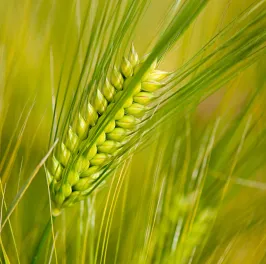
Barley is an important cereal crop for farmers which has been cultivated globally for thousands of years. Part of the grass family Poaceae, barley’s scientific name is Hordeum vulgare.
Barley serves multiple purposes and is found in products like bread, cereals, and soups. It also plays a major role in beer and whiskey production and is a common livestock feed.
Most commercial barley production focuses on a smaller number of cultivars - varieties developed through human intervention. These varieties are optimized for specific uses (such as brewing and distilling) or for growing conditions (climate adaptability). Barley can be grown in a wide range of environments and is known for its drought tolerance.
Guide to barley types
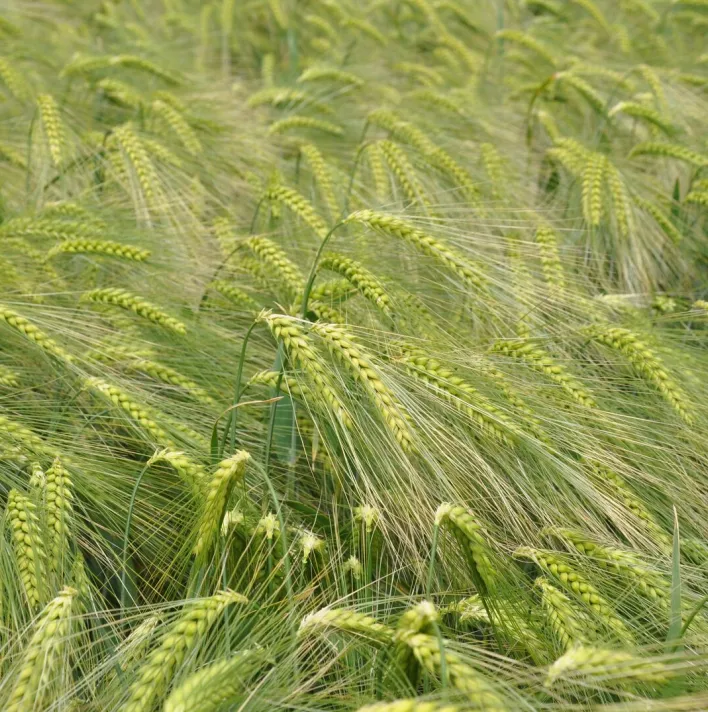
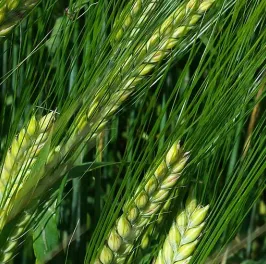
Two-row and Six-row hybrid
Two-row barley: Has two rows of seeds on each spike.
Six-row barley: Has six rows of seeds on each spike
Six-row barley: Has six rows of seeds on each spike
Hulled and Hull-less
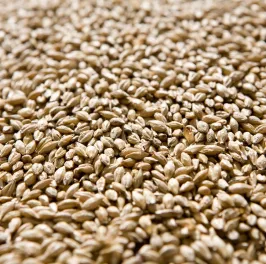
Hulled barley: The grain retains its outer hull after harvesting.
Hull-less (or naked) barley: The hull falls off during harvesting.
Hull-less (or naked) barley: The hull falls off during harvesting.
Spring and Winter
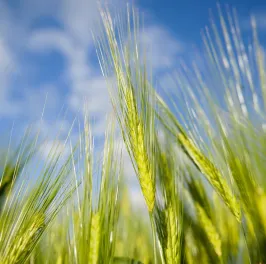
Spring barley: Usually planted in spring (in some situations, planted in fall) and harvested in late summer.
Winter barley: Planted in fall and harvested the following summer.
Winter barley: Planted in fall and harvested the following summer.
Malting and Feed
Malting barley: Used primarily for brewing and distilling.
Feed barley: Used mainly for animal feed.
Feed barley: Used mainly for animal feed.
Top producing countries
| Country | Global production (%) | Total production (2024/2025, million metric tons) |
|---|---|---|
| European Union | 35 | 50.29 |
| Russia | 11 | 16.25 |
| Australia | 9 | 13.27 |
| Canada | 6 | 8.14 |
| United Kingdom | 5 | 7.09 |
| Turkey | 5 | 7 |
| Ukraine | 4 | 5.8 |
| Argentina | 3 | 4.82 |
| Kazakhstan | 3 | 3.84 |
| United States | 2 | 3.15 |
Table Source: USDA Foreign Agriculture Service
How do you sow barley?
Barley can be planted in different ways. Traditional methods include broadcast seeding, where seeds are scattered on the field, and hand sowing, which is still popular on small-scale farms.
Modern large-scale operations use more precise techniques such as: drill seeding, to plant seeds in rows at consistent depths; air seeding, which distributes seeds through an air stream; and precision planting, which uses GPS and computer-controlled equipment.
No-till drilling is beneficial for soil health and has become more popular as a regenerative agriculture practice. By planting barley seeds directly into undisturbed soil or crop residues, it helps to conserve soil moisture and reduce erosion.
Factors such as farm size, available technology, soil conditions, and specific crop management goals will dictate the appropriate sowing method. Key considerations for successful crop establishment include seed rates, sowing depth, row spacing, and timing, all of which will vary based on barley variety and local growing conditions.

Is barley self-pollinating?
In 2003, Syngenta pioneered a breakthrough in barley breeding.
We were the first company in the world to create hybrid winter barley and sell it widely across Europe. This new type of barley helped growers increase yields and offered greater harvest reliability.
Through our expert R&D team’s knowledge of plant genetics, Syngenta has changed barley from a self-pollinating variety to one which allows pollen to flow between male and female plants. This means we can develop hybrids which produce high yields and offer robust vigor. With the use of agronomic protocols, seed production can be maximized.


Hyvido® Hybrid Barley
What is hybrid barley?
In today’s challenging growing environments, growers need varieties to perform well and achieve high yields under changing weather, disease and pest pressures. Hybrid barley was created to address several key challenges and opportunities in barley cultivation.
Hybrid barley is a type of barley created by crossing two genetically distinct parent lines to produce offspring with enhanced traits. This process, known as hybridization, aims to combine the best attributes of both parent lines, resulting in a variety that often exhibits superior performance compared to conventional, open-pollinated barley varieties.
Hybrid barley delivers stable yields across regions. In independent trials, many hybrid barley varieties have outperformed conventional varieties by 4.2-6.7 percent, depending on the region and growing conditions. It also has excellent agronomics, with high specific weight and fantastic disease resistance across Syngenta's variety portfolio.
Grass weeds pose significant challenges to hybrid barley crops, as they do to many cereal crops. These problems can be particularly impactful due to the genetic similarity between grass weeds and barley, making selective control more difficult. Hybrid barley is independently and scientifically proven to be better at competing with grass weeds such as black-grass, ryegrass and brome.
While hybrid barley is not as widespread as hybrid corn or hybrid rice, its adoption has been increasing in certain regions, particularly in Europe.
Other benefits of hybrid barley include:
- Root boosting: Hybrid vigor extends into hybrid barley's roots. Bigger roots are better at taking up moisture and nutrients.
- Flexible end use: Growers can take hybrid barley as a whole crop for biogas production or it can be harvested for grain.
- Brand new traits: Broad spectrum viral protection. Protection against BYDV MAV, PAV and Cereal Yellow Dwarf Virus RPV and Wheat Dwarf Virus.
- Uniformity: Hybrid barley is more uniform in growth and maturity, making management and harvest easier.
- Weed suppression: Hybrids suppress grass weeds better than conventional varieties. They are taller, produce more tillers, and have larger root masses, allowing them to more effectively compete for resources such as space, water, light and nutrients.
What are the hybridization techniques used for barley breeding?
Farmers know that most barley varieties, including both traditional and hybrid types, naturally tend to self-pollinate. However, to create stronger, higher-yielding barley, plant breeders need to cross different barley plants. This is called hybridization. Here's how they do it:
- Manual crossing: Breeders remove the male parts from one barley plant and add pollen from another plant by hand. This method is effective but takes a lot of time and effort.
- Male-sterile plants: Some barley plants are bred or modified to not produce pollen. These are planted next to pollen-producing plants to create hybrids naturally in the field.
- Modern lab techniques: Scientists employ DNA testing to select the best parent plants. They can also create perfectly matched parent lines faster using specialized lab techniques.
These methods aim to integrate the best traits from different barley plants to breed varieties that have:
- increased grain yield;
- improved disease resistance;
- better tolerance to drought conditions;
- improved water and nutrient use efficiency.
While hybrid barley can offer these benefits, it's important for farmers to evaluate cost, seed availability, and rotation needs.
Case study
Harnessing the power of hybrid barley
Back in 2003, Syngenta introduced the first iteration of hybrid barley. By crossing two genetically different parent plants, the resulting offspring outperforms both of its parents. This has been part of plant science for centuries, but techniques have been refined to produce new hybrids with improved traits that work for large-scale agricultural production.
Image
What varieties of barley does Syngenta offer?
Syngenta offers several barley varieties to growers. However, it's important to note that availability depends on regional factors, such as growing conditions, market demand and regulatory approvals.
Here's an overview of some of Syngenta's barley varieties.
Image
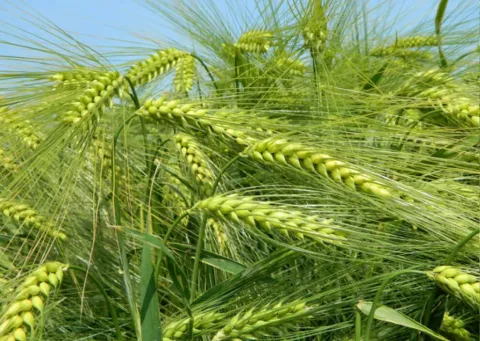
SY GALILEOO
A winter hybrid barley variety known for high yield potential and good disease resistance.
Image
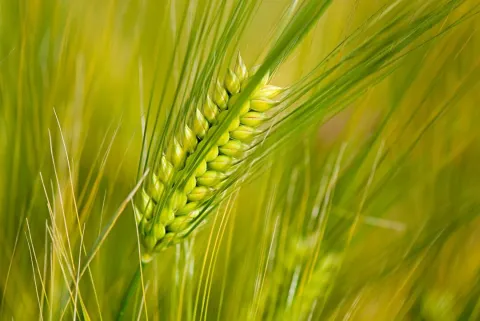
SY KINGSBARN
A six-row feed hybrid variety, noted for its grain quality and good all-round agronomics.
Image
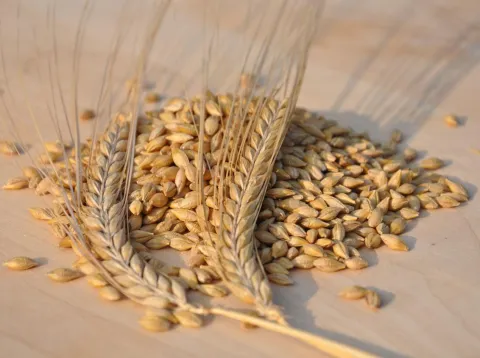
LAUREATE
A spring barley variety popular for its brewing and malt distilling qualities.
Image
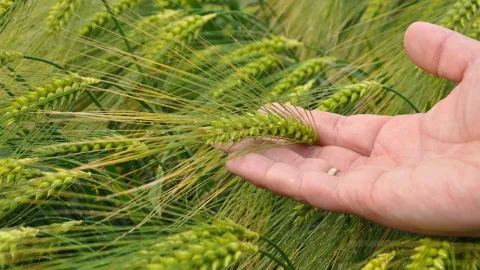
SY QUANTOCK
A Hyvido hybrid barley with exceptional yield potential and strong disease resistance profile.
Image
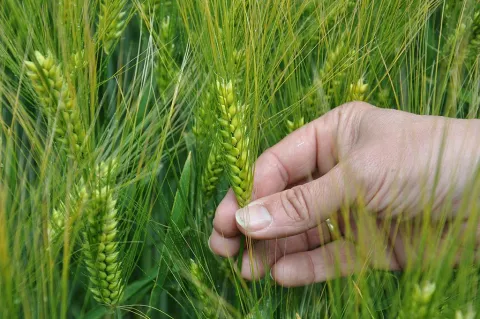
SY KESTREL
The first Hyvido Neo hybrid to bring resistance to barley yellow dwarf virus (BYDV).
Syngenta solutions to protect barley crops
Farmers worldwide are tasked with producing higher yields of sustainable, healthy crops, often in unpredictable environmental conditions. Barley growers need new strategies to grow disease-resistant crops more sustainably and Syngenta’s targeted crop protection tools can improve plant health and boost yields.
Here's a list of some key products with brief explanations.
-
Fungicides
- ELATUS™ ERA: Broad-spectrum fungicide that provides long-lasting protection against key fungal diseases.
- AMISTAR™: Strobilurin fungicide effective at controlling a wide range of foliar diseases in barley.
- KAYAK™: Offers protection against key barley diseases including net blotch and rhynchosporium.
- UNIX™: Specifically targets a range of foliar diseases in barley.
-
Herbicides
- AXIAL™: Controls annual grass weeds in barley.
- DEFY™: Broad-spectrum herbicide for control of annual grasses and broadleaf weeds in winter barley.
- TRAXOS™: Post-emergence herbicide for control of wild oats .
-
Biologicals
- EPIVIO™ G: Biological seed treatment that enhances root development and nutrient uptake.
- TAEGRO™: Biological fungicide that helps protect against fungal diseases.
- QUANTIS™: Biostimulant that helps crops better manage abiotic stress.
-
Seed treatments
- VIBRANCE™: Provides protection against seed-borne diseases.
- DIVIDEND™: Protects wheat and barley seeds from yield-robbing diseases such as bunt, smut, seedling blight and root rot.
-
Plant growth regulator
- MODDUS™: Strengthens stems and improves crop standability.
Product availability and approved uses may vary by country. Consult your local Syngenta representative or agricultural advisor for current regional guidance.
