

Inspired by a theme park visit, designed to survive
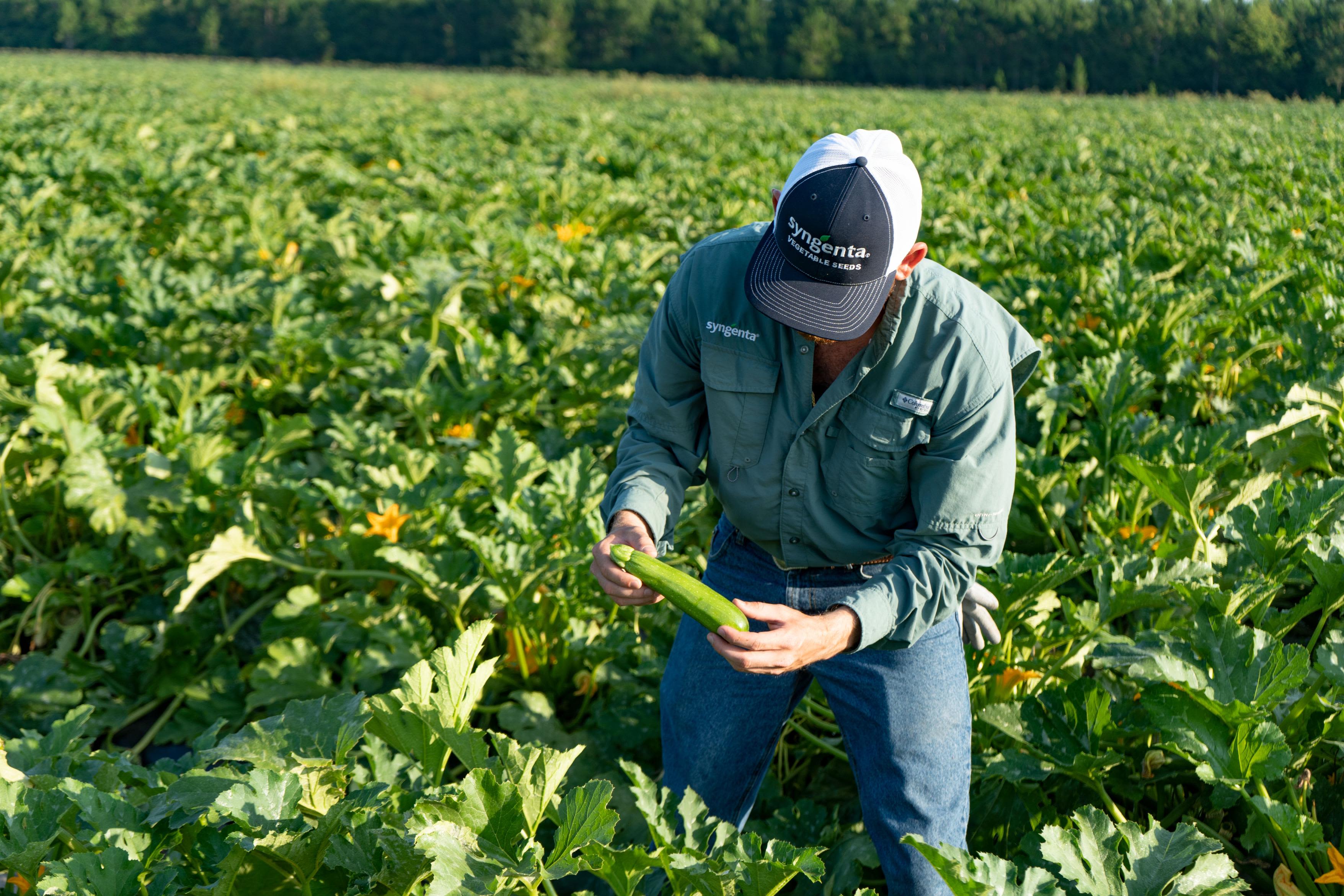

How a teenager's detour through a theme park led to a zucchini variety called Fortress that can withstand one of farming's most destructive diseases.
Les Padley was supposed to become a computer programmer. As a teenager in Florida, he was studying software engineering at a specialized high school. The path seemed set. Then his biology teacher offered the class a simple deal: grow something at home, get extra credit.
A family trip to Walt Disney World changed what happened next. At one of the park's exhibits, Les watched scientists grow plants without soil, feeding them through water-based nutrient systems designed for growing food in space. He went home, built his own version in the backyard, earned the extra credit, and never looked back.
"Once I started working with that setup, I got really interested in understanding how plants grow," Les says. "How they interact, the nutrition, everything else that's needed for them."
That detour led to a PhD in plant breeding and eventually a role at Syngenta's Global Cucurbits Center of Excellence in Woodland, California, where he breeds new varieties of squash.
Squash belongs to a family of crops known as cucurbits, which also includes watermelon, melon, and cucumber. The zucchini in your grocery store is one type of summer squash, though depending on where you live, you might know it as a courgette.
Over 17 years, Les has created varieties ranging from golden zucchinis to dark green shipping types, to nearly every yellow squash sold in North America. But his most significant breakthrough is a zucchini that farmers had been waiting over a decade for: one that can survive a disease capable of destroying an entire field in a matter of days.

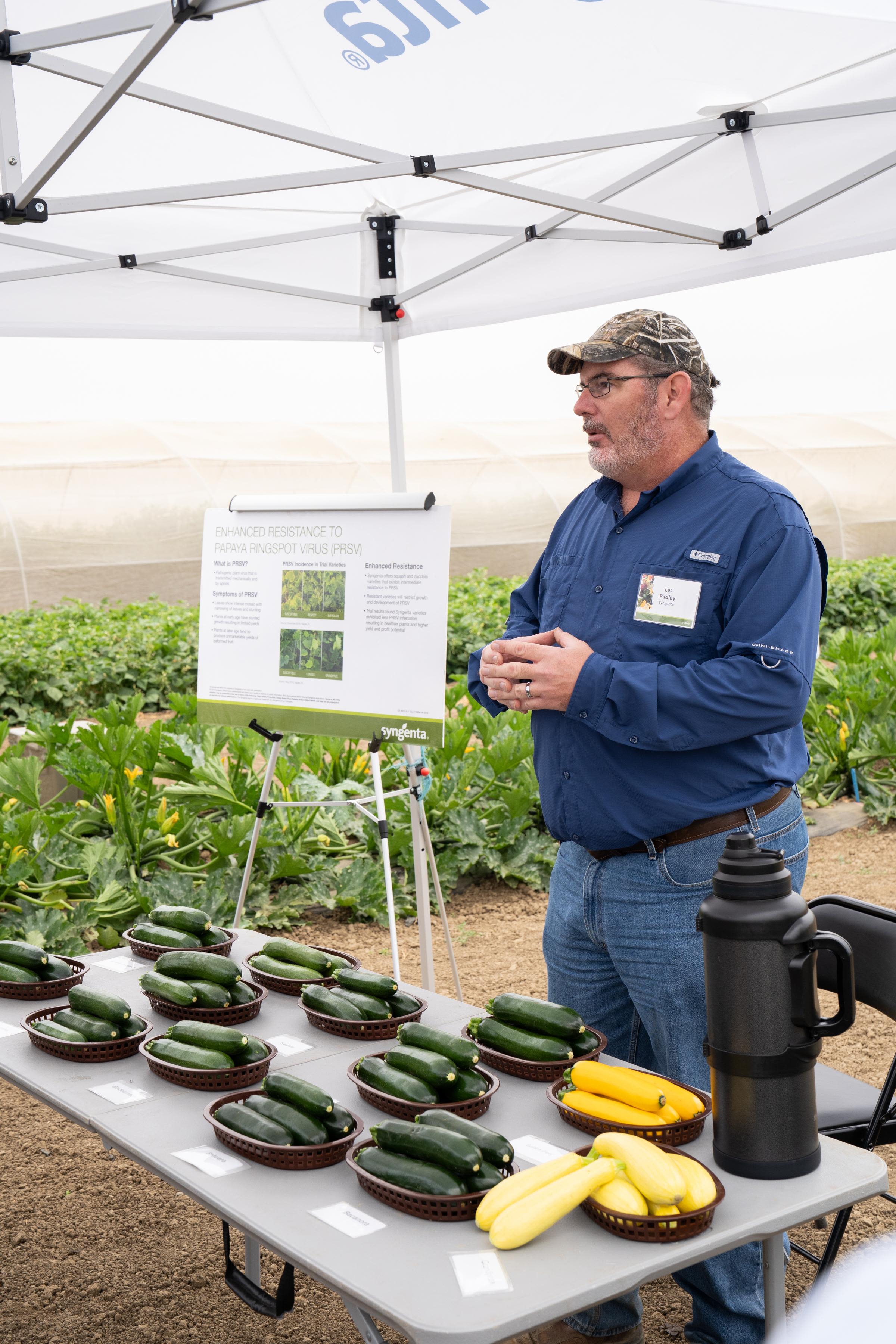
Les Padley with Fortress and other varieties of green and yellow squash he has designed.
Les Padley with Fortress and other varieties of green and yellow squash he has designed.
A disease that moves like wildfire
Downy mildew thrives in cool, humid conditions, typically during fall growing cycles. It kills leaf cells outright, turning them brown and black.
“It can make the crop look as if someone took a flamethrower to the field and basically burned it all to the ground," Les says.

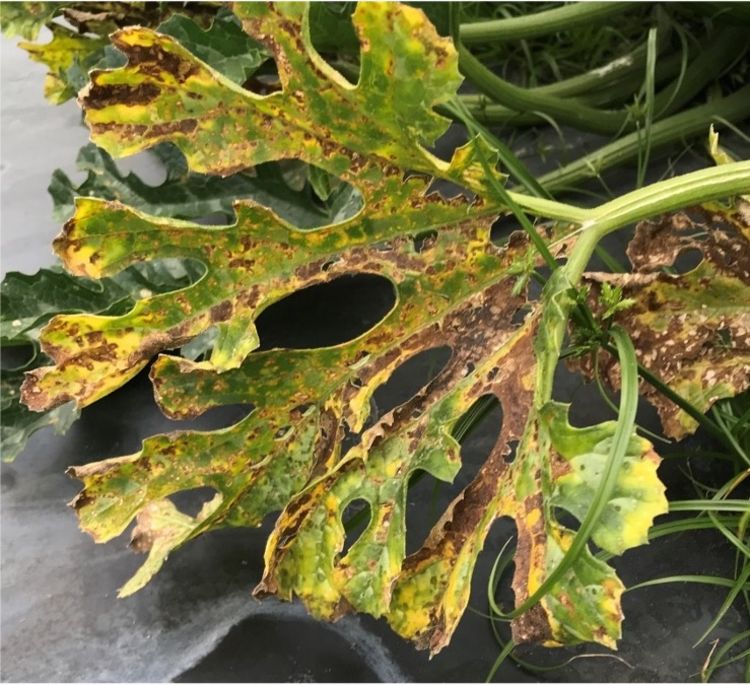
Susceptible squash plant without downy mildew resistance.
Susceptible squash plant without downy mildew resistance.
Downy mildew threatens cucurbit crops in more than 70 countries. In the US, squash alone is a crop valued at more than $200 million a year, according to the US Department of Agriculture. For growers along the eastern seaboard, from southern Florida to Georgia, the Carolinas, and north into Michigan and New York, the threat is especially acute.
Squash is a quick cash crop, which makes the damage worse. A grower can sow seed and begin harvesting within six to seven weeks. The zucchini that consumers buy at the grocery store is remarkably young, just 48 hours old after pollination. Plants can be harvested every other day for weeks, sometimes months. Many farmers plant squash after finishing a tomato or pepper crop, reusing the same production inputs to generate additional income between cycles.
That speed cuts both ways. When downy mildew strikes during late-season windows, it can wipe out the very harvest that was supposed to justify the grower's investment in mulch, fertilizer, drip lines, and labor.
A decade in the making
Les wanted to go beyond virus protection. Varieties resistant to viruses were already available. The bigger threat was downy mildew, caused by a fungus-like organism that spreads through air and water.
Developing genetic resistance requires identifying resistance genes in wild relatives of the squash plant, then painstakingly breeding those traits into commercially viable lines. From initial discovery to a product a farmer can plant, the process typically takes a decade or more.
The work carries its own risks. Every time breeders introduce genetic material from wild plants, they can bring along unwanted traits. In wild squash, the ratio of female to male flowers tends to be one to four or five. Commercial varieties need the opposite, because female flowers are the ones that produce fruit.
"Trying to create new varieties with higher levels of resistance while maintaining high levels of yield is one of our biggest challenges," Les says.
Some competitors have released varieties they describe as resistant, but which still show significant leaf damage under pressure. Les' team set a higher bar: a plant that shuts down the pathogen's ability to spread, rather than surviving alongside it.
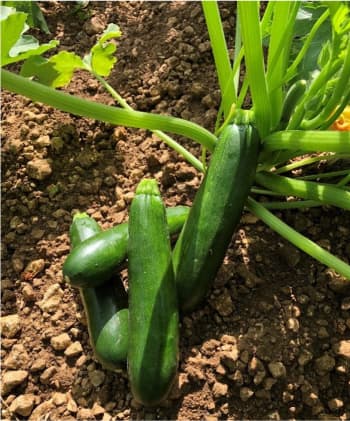
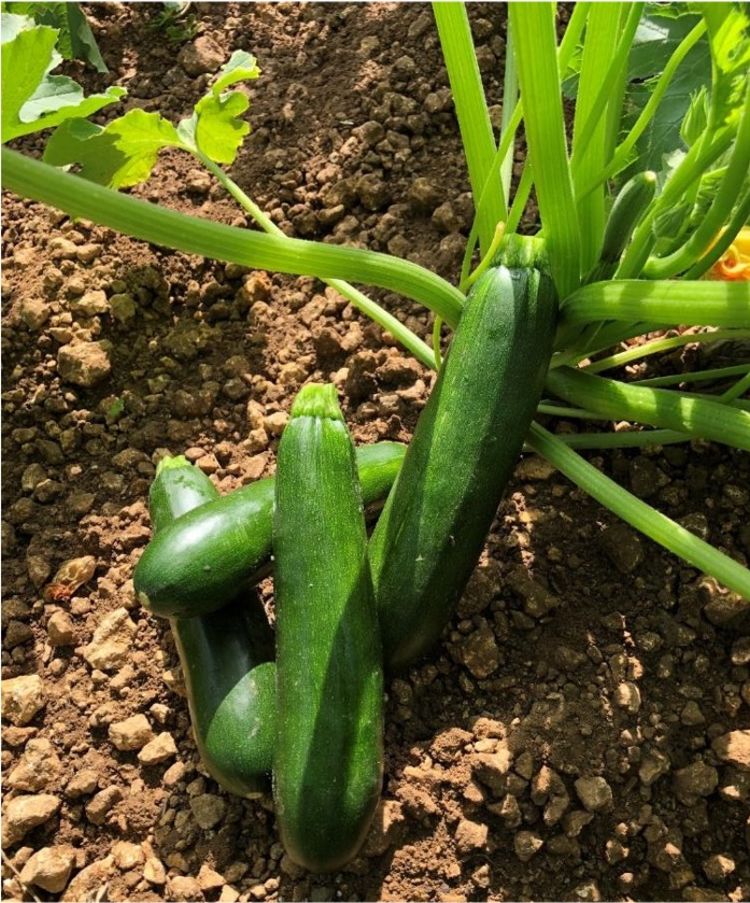
The result, after more than 10 years, was Fortress. A medium green zucchini, it became the first variety of its kind to carry downy mildew resistance. Syngenta also holds the only patent globally for this trait in green zucchini.
"That's why we chose the name," Les says. "We wanted a name that represented the protection this variety has against not only viral diseases, but also fungal diseases."

Polka dots of survival
Rebecca Wente-Naylor, a product specialist for Syngenta's Eastern US cucurbit portfolio, has watched Fortress prove itself in growers' fields.
She first encountered the variety years ago, when she was part of the breeding team. Even back then, the results were hard to miss.
"We knew we had something special," Rebecca recalls, "because you would see it in these fields that were just decimated with downy mildew. And it was standing up, perfect and green and tall, and still producing fruit."
What fascinated her most was how the resistance actually works. When downy mildew spores land on a Fortress leaf, the plant recognizes the threat and prevents the disease from spreading further, allowing the plant to stay productive.
"I had some growers go through the field and say, 'Look, it's got downy mildew, look at the bottom of the leaves,'" Rebecca says. "I would turn the leaf over and there wasn't any downy mildew growth on it. But you could see these little polka dots where the resistance was actually working."
What it means for growers
Without disease pressure, Fortress performs as a high-yielding variety with consistent cylindrical fruit. When downy mildew arrives, and in the humid conditions of the eastern seaboard it often does, Fortress keeps producing while other varieties collapse.
"The plant doesn't take the hit from the downy mildew, so it's able to be more productive longer," Rebecca says. "It can extend out the end of the season."
She recommends Fortress specifically for mid-to-late planting slots, when the risk of downy mildew is highest. For growers who invest heavily in inputs before harvesting a single fruit, every additional week of picking can mean the difference between profit and loss.
One story from the field captures it. A grower told Les he had planted a trial block of Fortress alongside his regular commercial variety. When downy mildew swept through, the commercial crop was destroyed. Only the Fortress block remained, green and productive amid the devastation. “The following season, the grower switched over entirely,” Les says.

Looking ahead
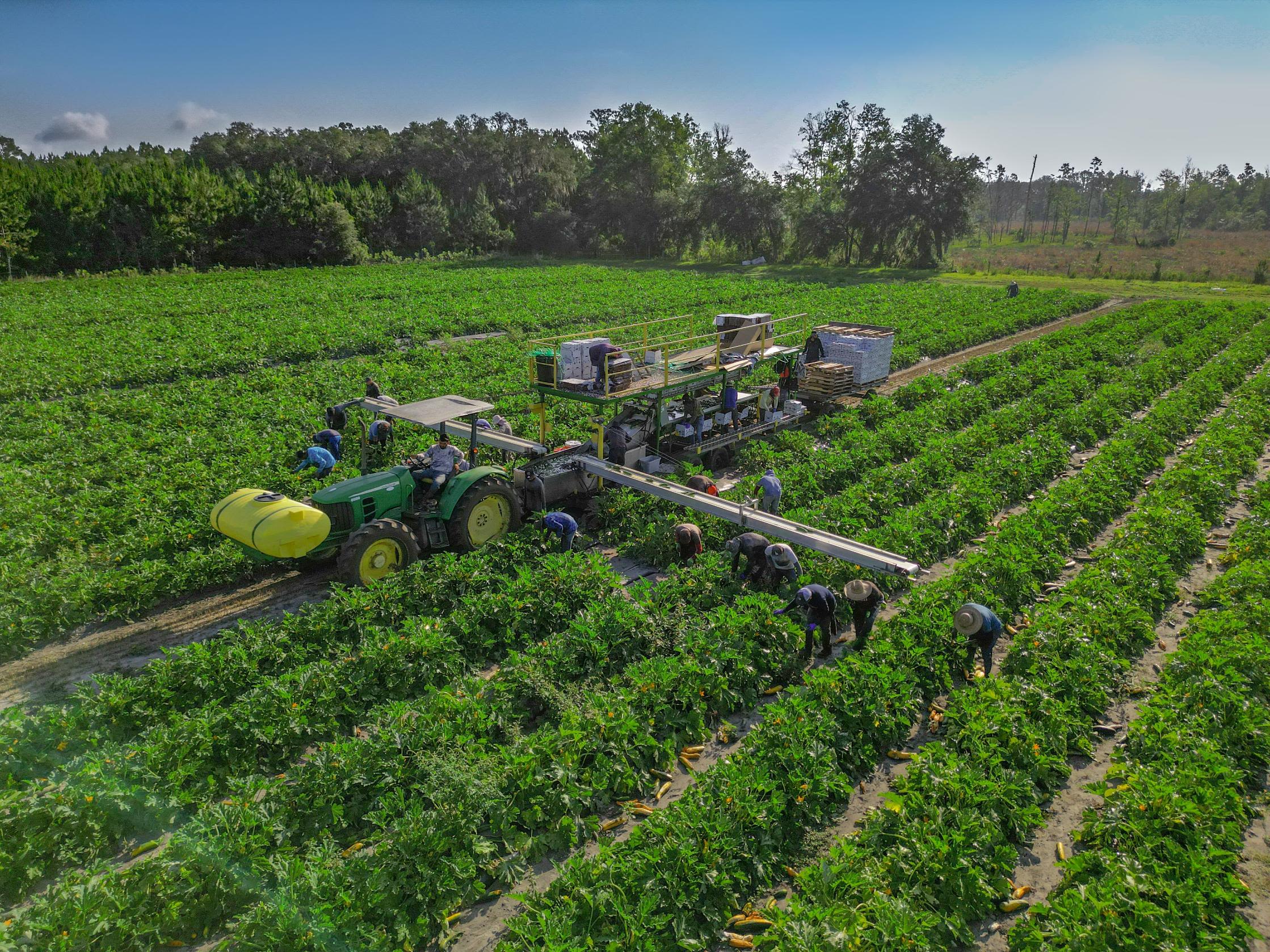
Squash production in the eastern United States follows the seasons, moving from southern Florida northward through Georgia and the Carolinas, up into Michigan and New York as summer arrives, then back south as temperatures cool in the fall. Syngenta wants its downy mildew resistance to follow that same path and then go further.
Fortress is being trialed in Europe and Australia, where squash is widely grown and growers face similar pressure from downy mildew.
Consumers may not realize it, but the shade of green zucchini they pick up at the store differs depending on where and when it was grown. Dark green varieties are bred to survive multi-day shipments from northwest Mexico. Spineless beauty types, easier to harvest by hand, do well in cooler northeastern conditions. Behind each of these is years of breeding work, balancing competing biological demands in pursuit of something that performs in both the lab and the field.

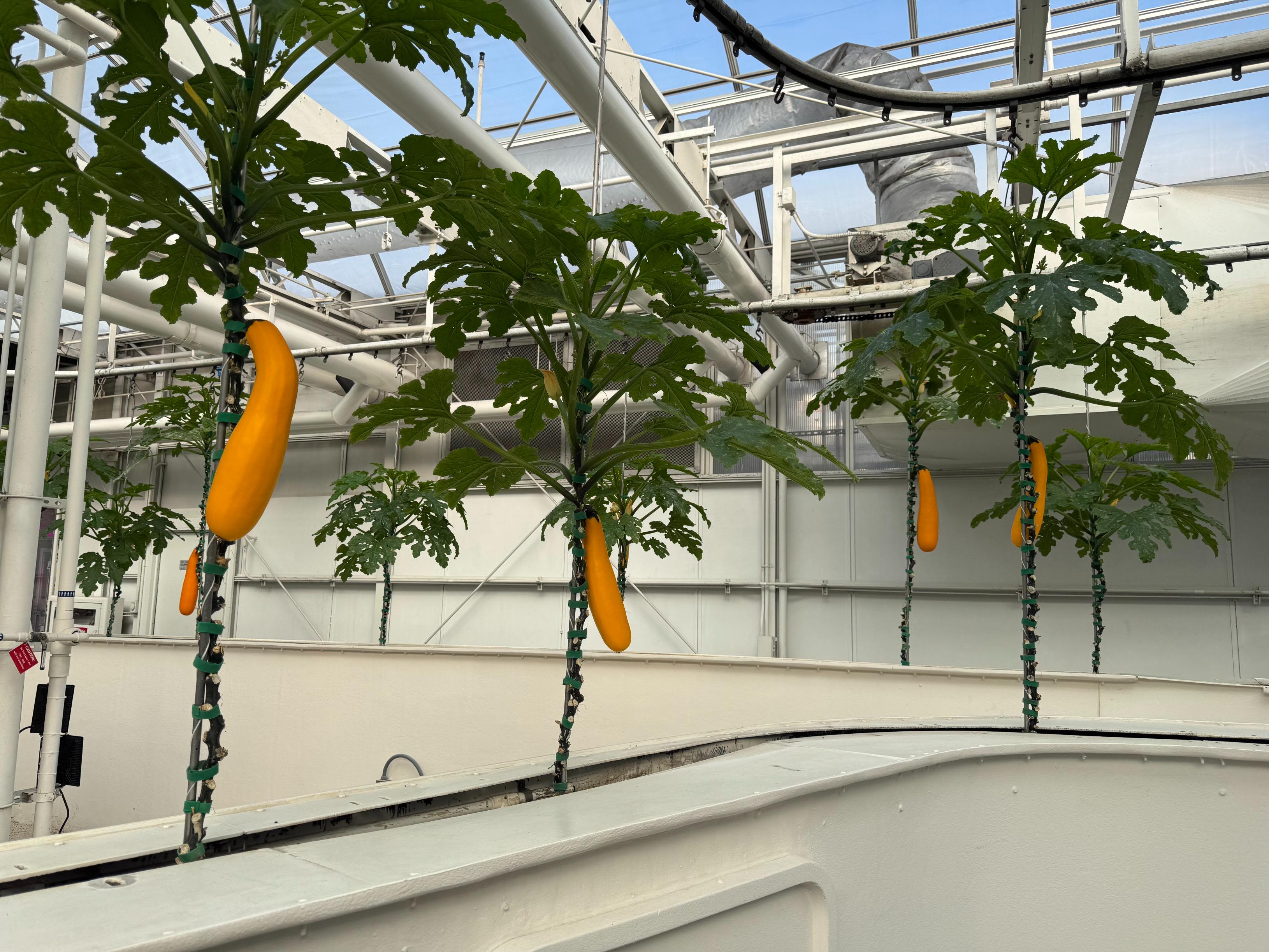
Golden Glory squash currently on display at ‘Living with the Land’ exhibit in Disney World, Florida.
Golden Glory squash currently on display at ‘Living with the Land’ exhibit in Disney World, Florida.
Back in Woodland, Les’ team is already working on developing the next generation of Fortress. And at Walt Disney World, visitors continue to file past one of Les’ creations: a golden zucchini growing in the very exhibit that first sparked his curiosity as a teenager.
"It came full circle for me, which was really fun," he says. "Hopefully we can inspire the next generation of horticulturists and scientists to develop more plants and varieties for the future."