

Staying ahead of the weeds
Tackling herbicide resistance through partnership, prediction, and the power of VIRESTINA™ technology.

Staying ahead of the weeds
Tackling herbicide resistance through partnership, prediction, and the power of VIRESTINA™ technology.

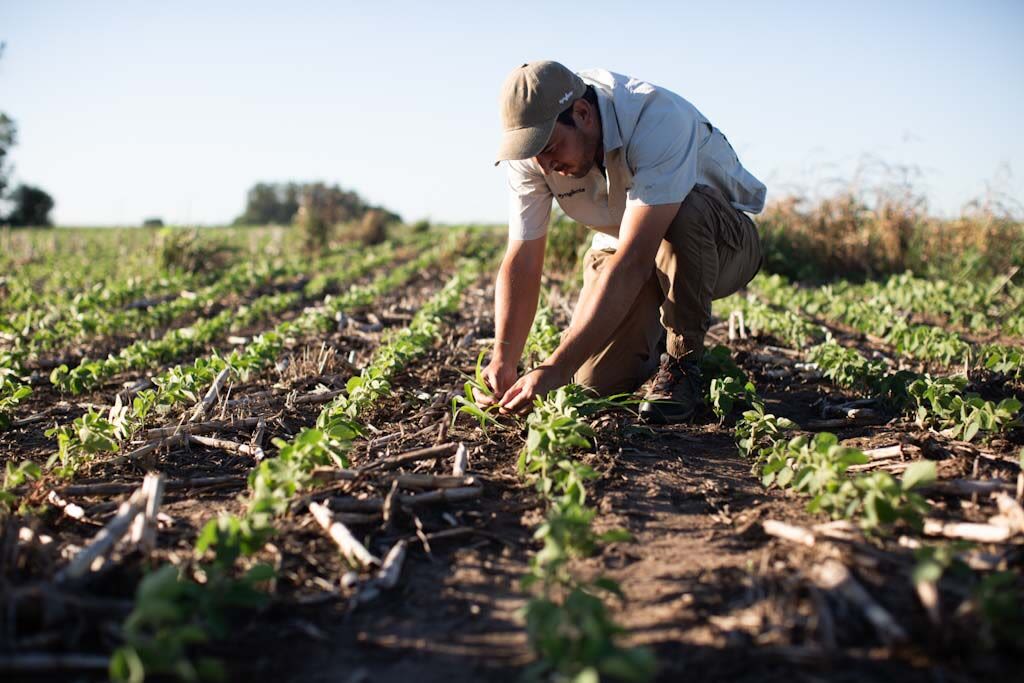
Across Argentina and Brazil, grass weeds have developed resistance to some of the most common herbicides used, known as ACCase inhibitors. Many experts from the region have long been warning about the danger that resistance poses.
Dr. Fernando Adegas is a Weed Scientist at the Brazilian Agricultural Research Corporation Embrapa. He explains: “The resistance of grass weeds is one of the main problems in global agriculture.”
Resistance means weed pressure goes up, yields go down and farmer livelihoods suffer.
The rise in resistant weeds means there is an urgent need for new technologies, which are crucial to securing farmers’ control over their fields and improving the sustainability of their farming operations.
However, developing new control methods for grass weeds is a hugely complex process. But Syngenta scientists, alongside a network of expert collaborators around the world, have achieved this, developing VIRESTINA™ technology, a breakthrough herbicide to tackle resistant grassweeds.
Find out more about how VIRESTINA™ technology works to tackle the problem of resistance in grass weeds.
Sarah-Jane Hutchings has been one of the many Syngenta scientists working on the issue of herbicide resistance for the last 15 years and is currently Portfolio Lead for Weed Control Bioscience. “Herbicide resistance doesn’t come from nowhere; it occurs through selection pressure applied to plants with a natural ability to survive herbicides.” she explains.
Tracking and responding to resistance issues is key to help develop effective new weed control options. Resistance exists at the genetic level, so, as Sarah-Jane says: “There are weeds which carry resistance to new tools we haven’t even discovered yet.”
In short, resistance is a constant problem. Sarah-Jane explains: “With the development of resistance, it's a case of when, not if it will evolve.”
Once it starts to increase in a population, the process can be hard to manage without new solutions.
But what if you saw resistance coming, and managed to get ahead of the problem before it started?
Seeing a decade ahead
Deepak Kaundun is a Syngenta Fellow and has been studying herbicide resistance for more than 20 years.
Around a decade ago, Deepak and a network of collaborators, saw the problem of resistance coming. Drawing on their collective knowledge of ACCase inhibitors, and close analysis of on-the-ground conditions plus reports from farmers, they made a prediction. Grass weeds, particularly those across Latin America, were going to evolve resistance to the most used control methods.
Sarah-Jane says: “We had no computer models at the time. Instead, we shared a deep understanding of ACCase resistance, understood the drivers and what the farmers were doing. We could see that farmers were moving towards compounds that made resistance likely.”
But when effective products are available, managing resistance that hasn’t yet appeared might seem less urgent. It’s here that the value of scientific expertise comes into play.
Deepak says: “I'm a scientist. If I tell you what is obvious to everybody, I'm not doing my work. We made this judgement based on expertise, on our knowledge of past occurrences, of other cropping systems, on how other weeds behave, and based on the same mode of action.
“So, I went to Sarah-Jane and said, there's something coming. Let's get prepared for it,” he continues.


Sarah-Jane Hutchings, Portfolio Lead for Weed Control Bioscience at Syngenta.
Sarah-Jane Hutchings, Portfolio Lead for Weed Control Bioscience at Syngenta.


Deepak Kaundun, Syngenta Fellow.
Deepak Kaundun, Syngenta Fellow.
Solving a problem that hasn’t yet happened


But here’s the first challenge scientists needed to overcome. How do you find a way of testing for resistance if that resistance hasn't developed yet?
Sarah-Jane explains: “We have a world-leading weed seed bank, built over many years. After all, we can’t buy these seeds – we have to collect them. This was so valuable when we wanted to identify compounds that could control resistance in a population that didn’t exist yet.”
The team decided to focus on species that were closely related to the weeds that they had predicted would start showing resistance.
Deepak says: “We looked for proxy species that would allow us to screen and test for resistance. For example, there’s a grass weed that’s very common in carrot fields in France, and I called a colleague and asked if I could have some seeds from this population.”
With the help of experts, academics and hundreds of scientists around the world, the team gathered seeds from these proxy species, ranging from the fields of France to tropical climates like Malaysia. When samples had been collected, these weeds had to be cultivated.
“We developed new tools to separate sensitive and resistant plants, grow them in polytunnels and then produce seeds to understand the resistance. It all started with me buying a polytunnel and bringing in a shovel from home. We've got 20 polytunnels on site now,” says Sarah-Jane.
By thinking ahead and building up a population of proxy species, the team established a platform to allow for screening and testing. And this paid off.
As increasing reports of resistance started to emerge from agronomists, researchers and farmers across Latin America, the team was already well placed to start screening and testing potential molecules.
It was not just in this biological expertise that the team was leading the way. After all, collecting these resistant populations won’t do much good if there isn’t a scalable, effective control option.
The close links between Syngenta experts and on-the-ground collaborators were again vital, as their real-world knowledge helped shape the creation, development and testing of VIRESTINA™ technology.
Sarah-Jane says: “Developing new ACCase inhibitors is an area of expertise at Syngenta. Every project has its challenges, but we carry these learnings forward, and we knew that knowledge would give us a great chance of succeeding with VIRESTINA™ technology.”

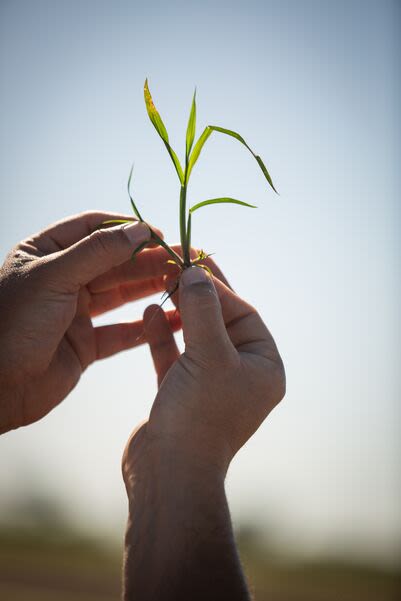
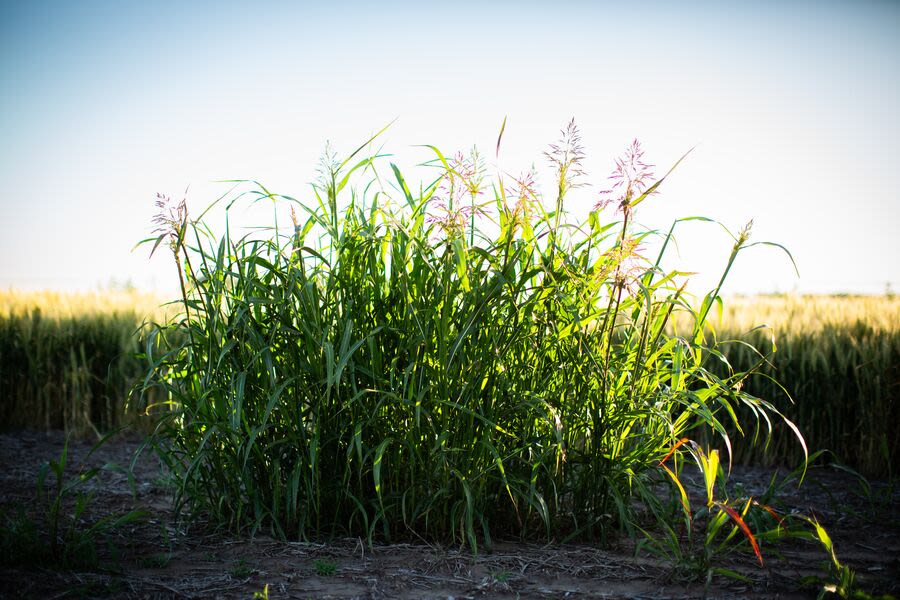
Weeds like Echinochloa colona grow aggressively and take precious nutrients away from farmers' crops.
Weeds like Echinochloa colona grow aggressively and take precious nutrients away from farmers' crops.

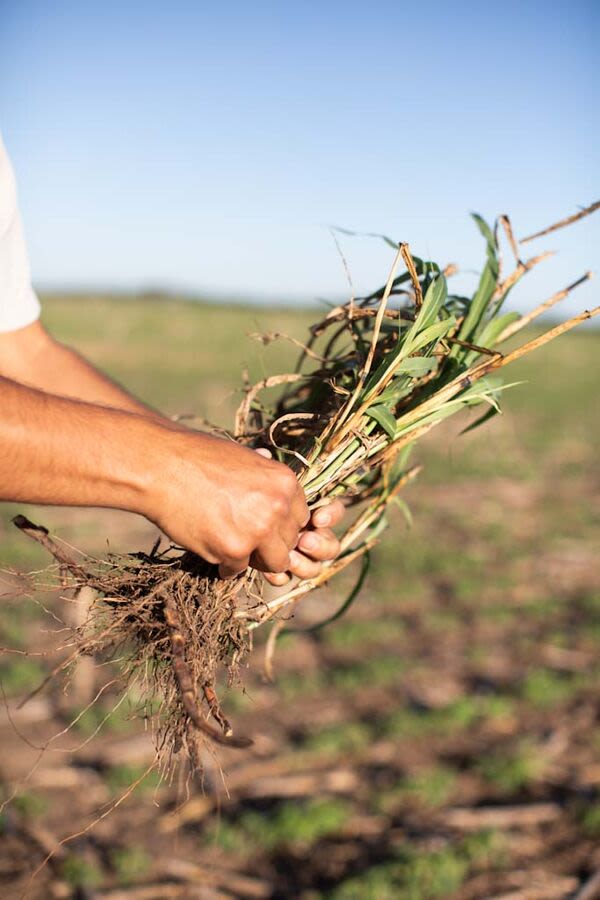
Tracking resistance means working in partnership with agronomists and farmers from around the world.
Tracking resistance means working in partnership with agronomists and farmers from around the world.
A breakthrough powered by collaboration

After a process that involved more than 15,000 potential molecules and the work of scientists from across the world, VIRESTINA™ technology was developed: the first product that can overcome the known mutations in weed genes that allow them to be resistant to other ACCase herbicides.
Breakthroughs are always a matter of collaboration and VIRESTINA™ technology is no different. Starting with bold scientific predictions, the project drew on global knowledge including leading agronomists and academics as well as the farmers who must manage resistance on the ground.
Looking back, Deepak is very proud of the collective insight brought to bear on the problem. "We not only predicted the country and the weed species, but we also predicted the exact mechanism of resistance too,” he says.
Sarah-Jane agrees: “It’s very validating to have a hypothesis, test it and see it come to fruition.”
As Deepak says, VIRESTINA™ technology shows the importance of predictive science: “There is a paradigm shift here. If you are trying to develop a solution for an issue that is already a problem, you are already behind. We have to keep being bold and keep thinking ahead to spot the next issue before it threatens farmers’ harvests.”
Watch the results of a 21-day lab test with pots of Lolium multiflorum. From left to right: Untreated plants, plants treated with generic grass herbicides and, on the right, plants sprayed with VIRESTINA™ technology. PICTURE CREDIT: © Syngenta. Courtesy of Will Plumb and Ania Jamka, Syngenta.
Watch the results of a 21-day lab test with pots of Lolium multiflorum. From left to right: Untreated plants, plants treated with generic grass herbicides and, on the right, plants sprayed with VIRESTINA™ technology. PICTURE CREDIT: © Syngenta. Courtesy of Will Plumb and Ania Jamka, Syngenta.
