

Why Brussels sprouts really do taste better today
It’s not your imagination, Brussels sprouts are no longer bitter vegetables, best avoided – and you have Syngenta to thank for that.
As families gather for festive dinners, including Thanksgiving and Christmas, one vegetable is sure to divide opinion: the Brussels sprout.
For many, this humble brassica conjures up unpleasant childhood memories. Perhaps you hid them in the mashed potato or stashed them under the cabbage, desperate to avoid their bitter taste.
A regular on the dinner plate at Thanksgiving and Christmas, the evolution of the Brussels sprout means today they are much less bitter and more flavorful than they were 30 years ago.
A regular on the dinner plate at Thanksgiving and Christmas, the evolution of the Brussels sprout means today they are much less bitter and more flavorful than they were 30 years ago.
But now, as an adult, you can’t get enough of Brussels sprouts, brushing aside those early experiences as nothing more than a childhood aversion. What if we told you that you’re not imagining things? That Brussels sprouts really do taste better now?
The Brussels sprout reinvention
First cultivated in the 13th century in what is now Belgium, it is thought that the vegetable is named after the Belgium capital after it gained popularity there in the 16th century.
But the modern-day Brussels sprout redemption dates back to 1999 and a Dutch scientist called Hans van Doorn who worked for Novartis Seeds, now part of Syngenta. He identified two crucial compounds that cause the bitter taste in Brussels sprouts: sinigrin and progoitrin, known as glucosinolates.
Derived from glucose and amino acids, glucosinolates are natural components found in many pungent brassicas, including cabbage and mustard.
When the brassica is cut, chewed or damaged in some way, the glucosinolates mix with an enzyme called myrosinase, producing the bitter flavor. This is an important part of the plant’s defense mechanism against enemies such as insects, slugs, rabbits and deer.
Using Hans’ research, work began on altering the taste of Brussels sprouts, a breeding program which eventually resulted in the milder, less bitter sprouts available today. That strain remains one of Syngenta’s top sellers.
Joske van den Burg is Germplasm Development Lead at Syngenta. She says: “We bred out the bitterness. We identified the glucosinolates that were causing this bitter taste and essentially threw out the parent lines that were very, very bitter. Therefore, now we only have mild-tasting varieties on the market. They are not sweet tasting though because they still have their nutty flavor.”
Even as an expert in all things Brussels sprout, Joske says that she didn’t like them as a child, but “now I love them”.
She continues: “What I like about Brussels sprouts as a crop is that it stands in the field for a very, very long time. They are planted in April and harvested around Christmas, so they need to stand throughout spring, summer, fall, and also winter. It’s a crop that can deal with everything, it’s really hardy.
“It stands up straight, sometimes over a meter tall. And I like the fact that you only eat the buds. It’s a really nice crop to breed. And they’re not bitter anymore, they are much more flavorful than they were 30 years ago. Everyone can enjoy them now.”

Global appetite for Brussels sprouts is growing, with the market increasing by more than a third between 2017 and 2021.
Global appetite for Brussels sprouts is growing, with the market increasing by more than a third between 2017 and 2021.
The popularity of Brussels sprouts
While some people will always push sprouts to the side of their plates, the statistics speak for themselves. According to the Royal Horticultural Society (RHS), Britons eat more Brussels sprouts than any other nation in Europe. The RHS reports that the UK sprout industry is worth £650 million to the economy. Looking at the vast acreage of sprout fields in the UK, it is equivalent to 3,240 football pitches. That’s a lot of sprouts.
While roughly a quarter of the UK population’s annual sprouts intake occurs during the two weeks leading up to Christmas, it’s not just Britons who are feasting on sprouts.
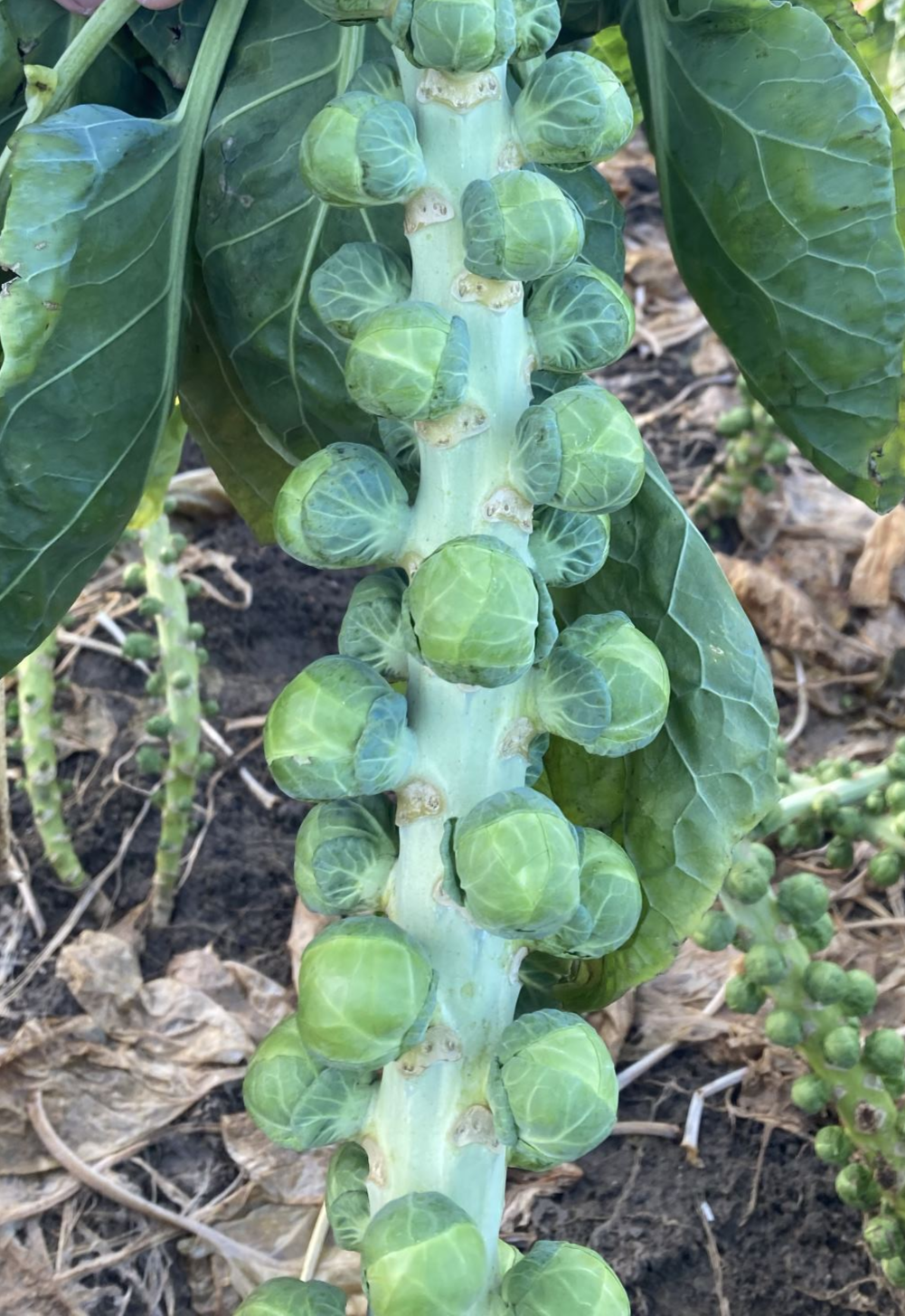
For example, the US produces 70 million pounds of Brussels sprouts annually – that’s around 32,000 tons. Meanwhile, between 2017 and 2021, the global Brussels sprouts market increased by more than a third. And, in 2020, Mexico overtook the Netherlands as the leading exporter of Brussels sprouts.
But anyone serving up Brussels sprouts this festive season should take care not to ruin their resurgence, as Joske explains.
“A big part of the bitter taste comes from the glucosinolates, but it also comes back a bit when you overboil them. So, it’s also about how consumers should prepare their sprouts so they taste good.”
Joske recommends steaming, stir-frying or roasting Brussels sprouts in the oven in order to retain the flavor and avoid an unpleasant taste. Follow her advice and no one will be hiding those sprouts come Thanksgiving and Christmas Day.
