

Assessing the impact of a summer of heat for European farmers
After a season of heatwaves, farmers across Europe are now reckoning with a compounding series of pressures.
The 2026 summer heatwave brought sizzling temperatures to the continent and record lows to European rivers. For farmers, the defining feature of this last summer is not simply a lack of rain. Throughout this season, heat, intense sunlight and wind combined to put pressure on crops at every stage, from germination to harvest.
The economic consequences of this have been severe with the European industry body for cereals and oilseed crops, COCERAL, estimating losses of nine million tonnes from crops like barley, maize wheat and oats across the continent.
Estimated losses across Europe from the heatwave sit at around nine million tonnes from crops like barley, maize wheat and oats.
Estimated losses across Europe from the heatwave sit at around nine million tonnes from crops like barley, maize wheat and oats.
Julie Sumac runs a mixed arable and livestock farm near Nancy in eastern France and is also a Farmer Relations Manager for Syngenta. She regularly surveys other farmers in the region to gauge how they are feeling after a season.
Julie says: "More than 60 percent of respondents described the season as 'disappointing' or 'very disappointing', with three-quarters of all respondents expecting their financial results to be below or well below their historical average."
Andrew Paines is a Syngenta agronomist in the UK, and is seeing the consequences in arable crops. In his patch, around Lancashire in the North West of England and Nottinghamshire in the East Midlands, harvest happened startlingly early with both yields and quality showing issues.
"Yields are down, depending on the crop, maybe 20 to 40 percent on some cereals. For beans, I have heard people saying around 70 percent yield loss."
Andrew Paines, Syngenta agronomist.
Andrew Paines, Syngenta agronomist.
Over in Germany, Sebastian Funk is another Syngenta agronomist seeing a similar picture. "In winter wheat there is a big shortfall with yields about 25 percent down. On top of that, pricing is down too, making this a very hard year for both yield and farmer finances. So that's three tough years in a row for German farmers."
Syngenta's Sebastian Funk, says this has been a very hard year for both yields and farmer finances.
Syngenta's Sebastian Funk, says this has been a very hard year for both yields and farmer finances.
Resilience for the long term
In the face of these complex challenges, from shifts in weather to larger economic forces, the question becomes what can be done?
Across Europe, Syngenta's on-the-ground experts emphasize that there isn't a single, one size fits all solution. Instead, the recurring word is resilience: the ability of a crop and a farm business to absorb a poor season without becoming less viable in the next one.
Simon Jackson is a Syngenta agronomist in the south of England, working with vegetable growers who produce everything from onions and brassicas to fresh salad leaves.
Simon points out that for vegetable growers, that can mean choosing varieties which perform relatively better in heat and drought conditions, as well as implementing other measures such as more efficient tape irrigation, or adapting cultivation to conserve soil moisture.
But there are trade-offs. For instance, cover crops may improve soil structure over time, but they can also remove precious moisture before the following crop is established.
“There are always trade-offs in the system,” Simon says. “The challenge is working out the best approach.”
Andrew sees building organic matter in soil as central to that work, particularly in more intensive arable systems and on lighter soils. More organic matter can help soils hold water for longer, while cover crops, mulching and mixed-farm manures may all have a role.
Julie's research backs this up too. "The results show that farmers are very focused on protecting their margins, and a majority are looking at reducing or adapting their tillage to help their farm resilience,” she says.
While cutting spending may seem like an obvious response, Andrew advises that’s not always the right approach to take. He says: “You need to ensure you work with products that can potentially help build on-farm resilience.”
Simon makes a similar point about biostimulants and other crop-stress management tools. While not a miracle cure, they are an invaluable part of response, he says.
“When I speak to farmers, I talk about the peaks and troughs of growing. Crop-stress tools may delay the dip and make it less deep. That can build a bit more yield, making them a crucial part of the whole system farmers now need to consider."
Sebastian agrees with how vital it is to think in terms of a holistic system. He says: "As we saw this summer, heat is unpredictable and this changes crop rotation and farm management. Dealing with heat is a multifactorial problem that is weather, soil and region specific.
"Biostimulants like QUANTIS can help with heat stress and drought but we need to build ways of mitigating extremes; heavy rain has to be soaked up so it can be used in future weeks of extreme heat."
Innovation under pressure
The challenge now is to turn a season of heat stress into practical changes without minimising the hardship it has created.
Andrew believes that starts with acknowledging the scale of the pressure and offering growers relevant advice, not simply repeating a pre-existing message. “You need to pick up on what has happened this year, acknowledge it and say, ‘We are here. Come and talk to us,’” he says. “Having empathy for growers is key.”
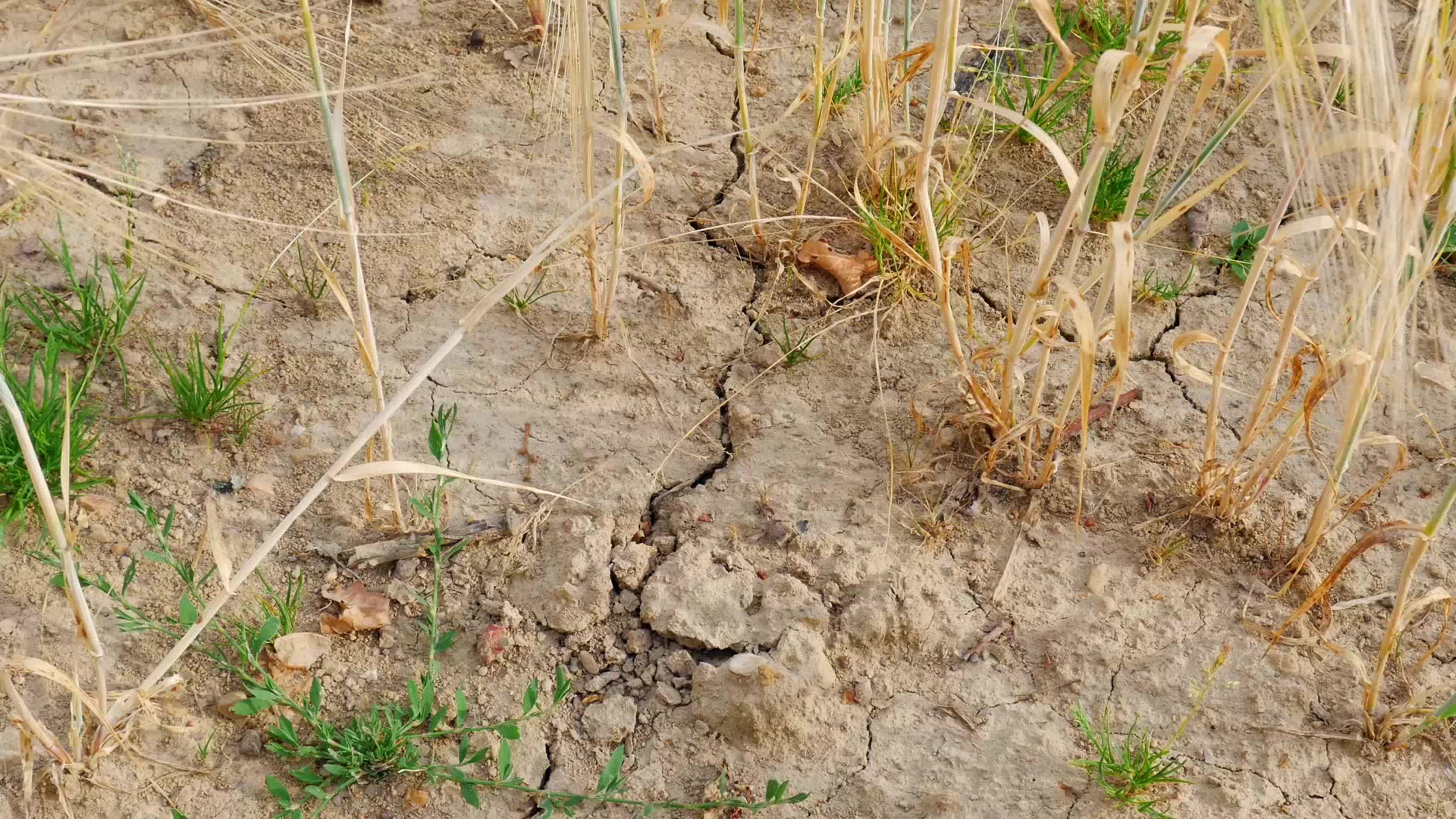
In the face of these climate challenges, farmers are looking to minimize risk by using varieties with better disease resistance, heat-tolerance and consistent yields.
In the face of these climate challenges, farmers are looking to minimize risk by using varieties with better disease resistance, heat-tolerance and consistent yields.
This must go together with supporting new approaches to this complex problem, says Sebastian. "Predicting the future is hard - we know what happened in the last five years, but who knows what the next five years will bring. We have to get new breakthroughs and innovations to farmers more quickly and show farmers the value of what we do."
This is particularly important as farmers start planning for the next season. Julie says: "Our research shows that farmers are not just looking for high yields but minimizing the risk by using varieties with disease resistance and consistent yields – this is an area we can bring real value to farmers."
But despite the challenges, farmers are not passive in the face of it. “Farmers are great innovators,” Simon says. “In more than 30 years in farming, I have seen them make solutions with whatever they have to hand."
The task is to match that spirit with systems that hold more moisture, crops that tolerate more stress and decisions that protect both the current harvest and the farm’s ability to plant again.
In the wake of a seismic heatwave, resilience is not just an abstract ambition or easy buzzword. It is the difference between surviving a difficult season and being ready for the next one.
