

Brewing success for sustainable coffee farmers
- Syngenta and key partners are helping smallholder coffee farmers in Lam Dong, Vietnam, adopt more sustainable Robusta practices.
- The project combines pest and disease management, efficient crop protection, biologicals and cover crops to improve resilience, soil health and biodiversity.
- Previous Syngenta coffee protocols increased yields by more than 0.5 tonnes per hectare and farmer profits by 9%, while reducing reliance on inputs.
- Syngenta and key partners are helping smallholder coffee farmers in Lam Dong, Vietnam, adopt more sustainable Robusta practices.
- The project combines pest and disease management, efficient crop protection, biologicals and cover crops to improve resilience, soil health and biodiversity.
- Previous Syngenta coffee protocols increased yields by more than 0.5 tonnes per hectare and farmer profits by 9 percent, while reducing reliance on inputs.
Coffee is the world's third most consumed drink, after water and tea. More than two billion cups of coffee are consumed every day, yet the beans behind those cups are becoming increasingly difficult to produce.
Vietnam, for example, is the world’s leading producer of Robusta. This is the coffee variety widely used in espresso blends and instant coffee across the globe.
Cultivation in Vietnam has expanded by almost 100,000 hectares over the past decade. As global demand has risen, so too has the domestic appetite for coffee from Vietnamese consumers.
But with growth, comes challenges. High demand at home and in the global market puts pressure on land use, which, in turn, incentivizes monocropping - a practice that can have negative impacts on biodiversity and long-term productivity.
Thanh Nguyen, Stewardship Manager for Syngenta, says some of the other problems that smallholder coffee farmers in the country have to contend with are harder to spot.
"Farmers across the region face very serious issues due to mealybugs or diseases like leaf blight and root rot. Many of them are not easy to recognize, especially in the early stages. When symptoms show in the field the damage is already done, leading to loss of productivity and quality," Thanh says.
Mealybugs are a major pest in coffee farming that can cause substantial yield losses if not managed appropriately.
Mealybugs are a major pest in coffee farming that can cause substantial yield losses if not managed appropriately.
Coffee production has also been impacted by the changing climate, which can lead to intensifying pressure from pests and diseases.
“The temptation for farmers in the past might have been to resort to heavy use of pesticides, but consumers are increasingly interested in not just quality, but ensuring that their morning cup of coffee comes from sustainable and responsible farms," adds Thanh.
Helping farmers work more sustainably and effectively
“As Vietnam takes a leading role in the world in coffee volume, we want to ensure that our farmers also lead the world in sustainable farming prosperity,” he says.
To that end, the past year has seen a unique project unfold in Lam Dong province, in Vietnam’s Central Highlands region.
Syngenta has been testing a science-based approach for coffee farming. The aim is to generate data that can help validate farming practices that enhance crop resilience, soil health, and biodiversity.
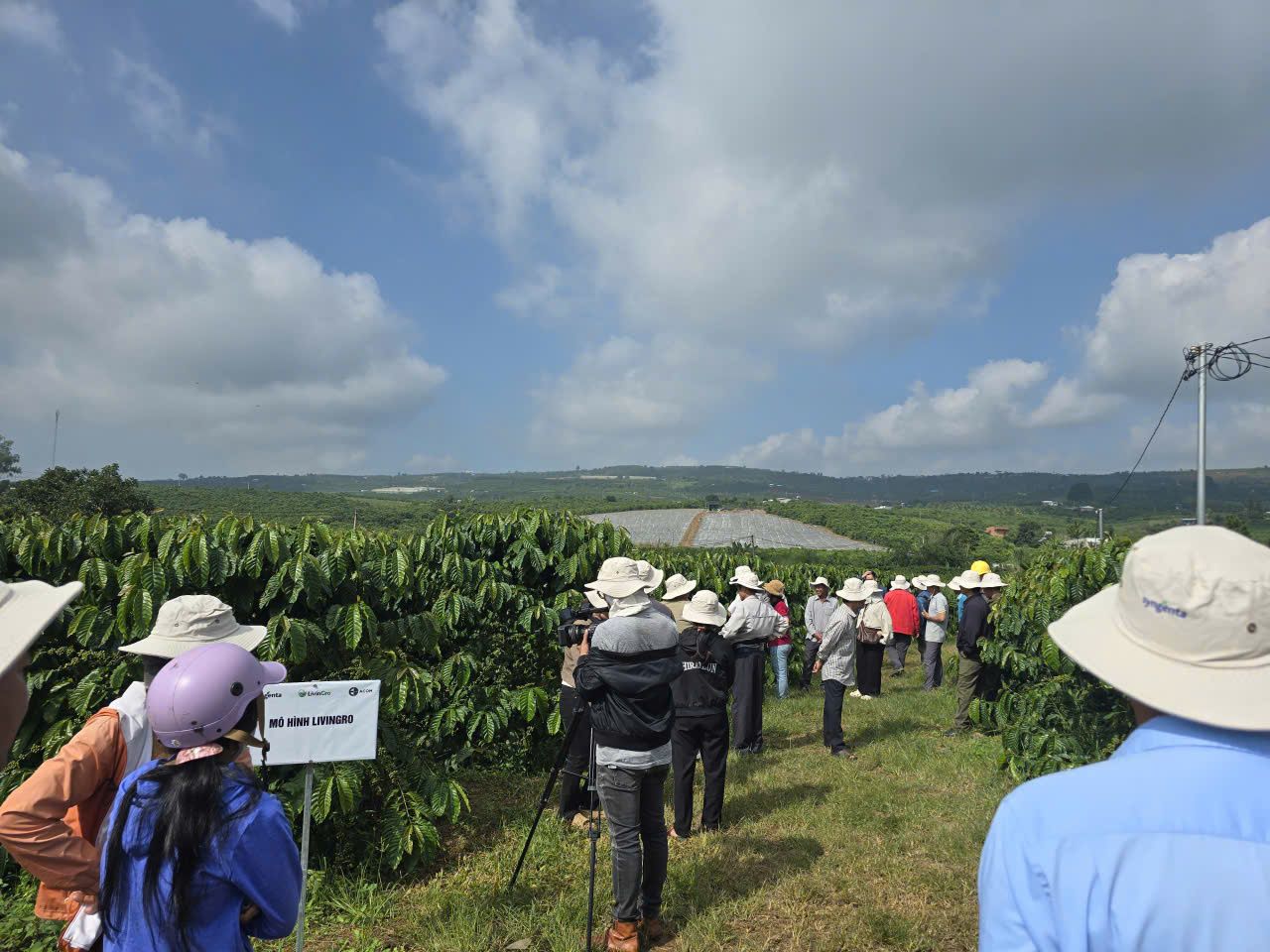
In partnership with ACOM, a major coffee exporter, the project has reached around a thousand farmers, providing them with information and training on how to protect crops safely and effectively, spot diseases early and improve soil health.
Rather than farmers treating diseases and pest threats as they emerge, the project has developed a protocol for each stage of plant growth, protecting the crop from the start.
Utilizing breakthrough solutions like TYMIRIUM® technology, the aim is to be far more efficient in the use of crop protection and other inputs. This means that farmers may be able to use fewer inputs and allow them to be more proactive in caring for their crops.
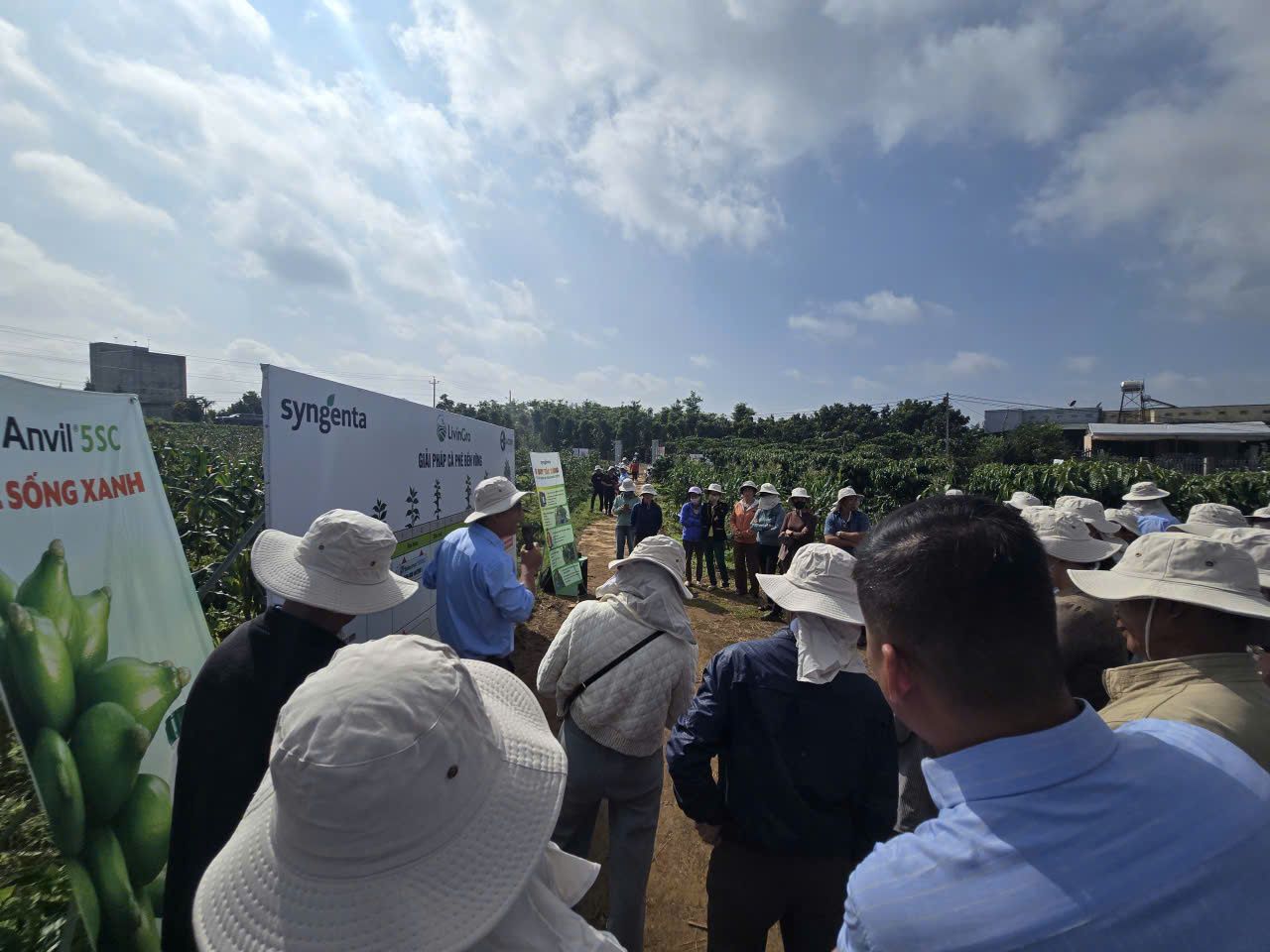
The project also encourages the use of agricultural biologicals where appropriate and the integration of sustainable agriculture practices, such as cover cropping, to protect soils and reduce erosion. In short, the entire project is geared towards helping farmers achieve a higher yield with a lower environmental impact.
Anh Hung, a coffee farmer in Lam Dong, says: "Before we farmed the old way, using chemical fertilizer. This year we're using less. This way of farming gives far better results."
Thanh adds: "In previous projects on coffee, Syngenta’s protocols have helped raise farmer profits by nine percent and increase yields by more than 0.5 tonnes per hectare over conventional practices."

At a field day, the Syngenta team demonstrated the science-based approach to coffee farming to coffee farmers in Lam Dong province.
At a field day, the Syngenta team demonstrated the science-based approach to coffee farming to coffee farmers in Lam Dong province.

The Syngenta protocol focuses on tailored crop protection for each stage of plant growth, allowing farmers to be more proactive and sustainable in managing disease and pest pressure.
The Syngenta protocol focuses on tailored crop protection for each stage of plant growth, allowing farmers to be more proactive and sustainable in managing disease and pest pressure.
The power of partnership for positive results
Vo Ngoc Quyen, Project Team Leader for ACOM, says: "The transformation of the coffee industry needs to start with changes that can be implemented right at the farm. Collaborating with Syngenta helps us and farmers test, evaluate, and gradually refine practices suitable to production conditions, while meeting the increasingly high expectations of the value chain for quality and sustainability."
The project team (left to right): Nguyen The Truong (Syngenta); Nguyen Van Thang (Syngenta); Vo Ngoc Quyen (Acom); Nguyen Thanh Tuan (Syngenta); Tran Van Viet (ACOM); Nguyen Cong Thanh (Syngenta).
The project team (left to right): Nguyen The Truong (Syngenta); Nguyen Van Thang (Syngenta); Vo Ngoc Quyen (Acom); Nguyen Thanh Tuan (Syngenta); Tran Van Viet (ACOM); Nguyen Cong Thanh (Syngenta).
As well as partnering with ACOM, the team are also working with scientists from the Research Institute of Biotechnology and Environment (RIBE), part of the University of Agriculture and Forestry in Ho Chi Minh City. Here, scientists are tracking soil health and biodiversity data, such as the presence of beneficial pollinators. The aim is to build a long-term scientific database that can monitor the efficacy of farming practices over time.
Thanh Nguyen Tuan, Head of Sustainability and Corporate Affairs for Asia and Vietnam, sums up the goals of the project: “The project demonstrates how Syngenta translates its commitment to sustainable development into concrete actions in the fields. Through cooperation with ACOM, RIBE and farmers, Syngenta aims to build a scientifically based model that is suitable for conditions in Vietnam."
