

Buzz of satisfaction continues after 40-plus years in the business of beekeeping
As he celebrates more than four decades of work at Syngenta, Enkhuizen's resident beekeeper Joop Kampen shares what he's learned about the critically important role of pollinators in agriculture.
It’s the buzz that Joop Kampen loves. Not that fizzy, giddy feeling you get in the thick of hard work, when it feels like everything’s on the right track – though he likes that part, too. We’re talking about the literal, steady buzz of some 30,000 bees busy pollinating. That harmonious, happy hum is the hallmark of a productive, robust hive. When Joop hears it, he knows all is well.
Joop Kampen is the beekeeper at Syngenta Vegetable Seeds’ Enkhuizen site.
Joop Kampen is the beekeeper at Syngenta Vegetable Seeds’ Enkhuizen site.
Joop is the resident beekeeper at Syngenta Vegetable Seeds’ Enkhuizen site, in the Netherlands. It’s a rare profession in the country, but a popular hobby, as it is around the world. And it’s critically important. Without pollinators, including bees, flies, and some types of bats, large agricultural companies like Syngenta can’t develop new seeds at the speed and scale growers around the world need. Pollinators, and those who nurture them, like Joop, play an essential role in maintaining food security and boosting biodiversity around the world.
As he explains, supporting the global food chain is all in a day’s work. “If pollination fails at any stage, the entire seed production chain stops. After years of work, everything can be lost.”
Why is pollination important?
Humans have been working with bees since the dawn of agriculture. Evidence dating back as far as 9,000 years ago suggests prehistoric farmers kept bees. And for good reason: bees and pollinators play a critical role in plant growth. It’s thanks to these tiny helpers that we have plentiful food: an estimated 35 percent of our global food crops depend on pollinators to reproduce and grow.
These flitty flyers carry pollen from one plant to another, supporting some of them to reproduce and grow. Not only do these industrious helpers boost plant production; they also play a crucial role in maintaining biodiversity and healthy ecosystems.
For large companies like Syngenta, pollinators also play a crucial role in vegetable seed breeding and seed production. While agriculture has advanced dramatically since the days of those prehistoric farmers, we still tend to bees. Not all plants need pollinators in order to reproduce, but some popular fruits and vegetables, including watermelons, cucumbers, and zucchinis, do.
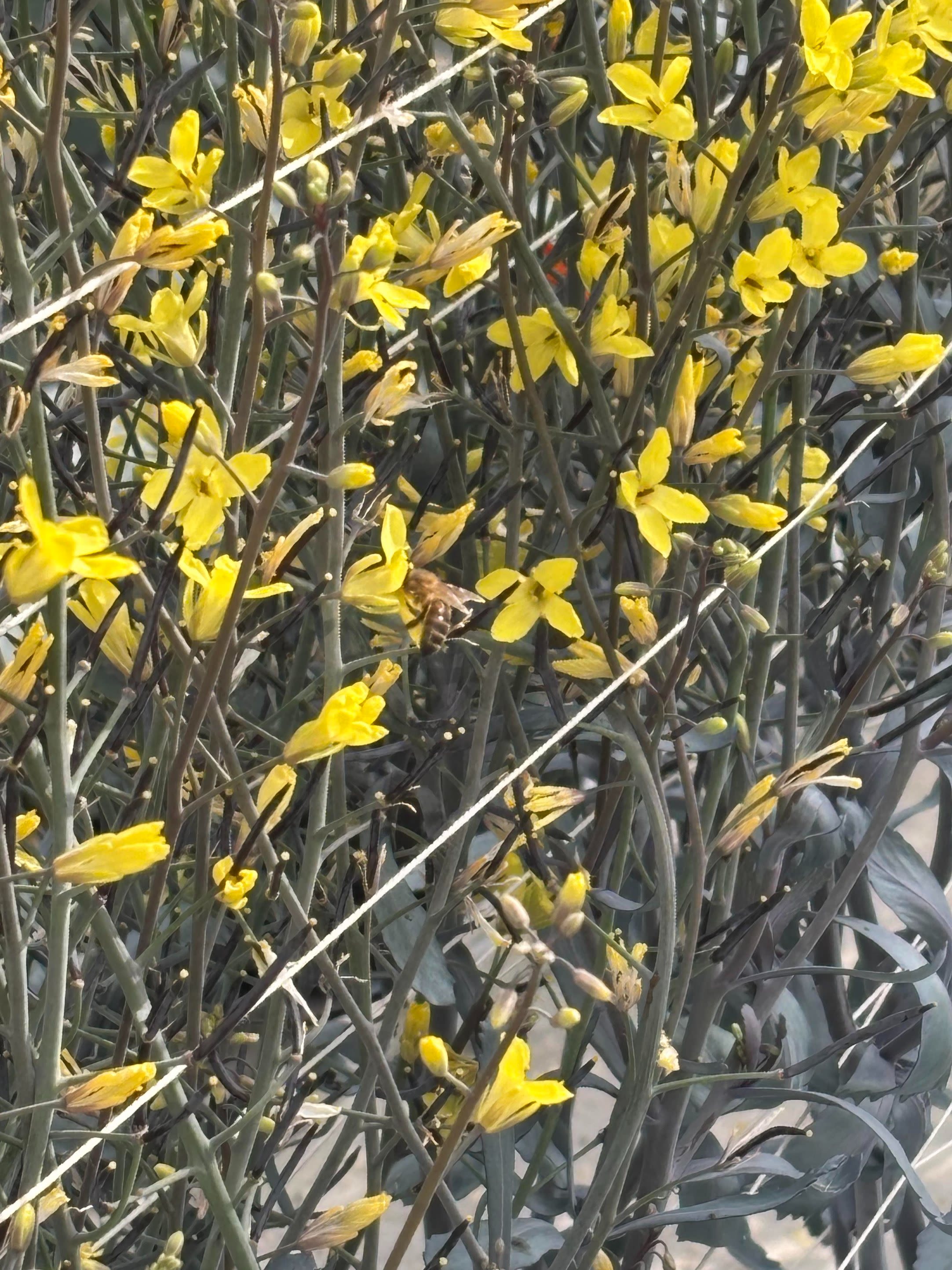
“Everything begins with selection,” Joop explains. “Breeders cross plants to develop better varieties. That starts in very small compartments. Successful pollination there produces seed, which is then multiplied over multiple cycles.”
What may sound like a simple process is, in fact, incredibly complex. Each step is rigorous, equally important, and can’t be rushed.
“When you walk into a greenhouse and hear that constant buzz of bees working everywhere, every meter, that’s when you realize how essential pollination really is.”

It is estimated that 35 percent of our global food crops depend on pollinators to reproduce and grow.
It is estimated that 35 percent of our global food crops depend on pollinators to reproduce and grow.

Pollinators play a crucial role in vegetable seed breeding and seed production.
Pollinators play a crucial role in vegetable seed breeding and seed production.
Why are pollinators important for Syngenta?
The essential role that pollinators play in agriculture, and for large agri-tech companies, may be surprising. Despite enormous strides in agricultural technology, supercharged by AI, we still rely on these ancient, industrious workers to grow some types of seeds. At Syngenta, pollinators are also crucial to our R&D and breeding capabilities. To breed new seed varieties every year, our scientists must first test and trial new traits, at speed, by monitoring how a crop grows throughout its life cycle. Some seeds cannot reproduce without pollination, and Mother Nature’s helpers, like bees, flies, and wasps, are most effective at it. Without these helping hands, we simply would not be able to drive the innovative breeding programs needed, at the speed and scale today’s growers need.
The making of a beekeeper
Joop didn’t set out to become a beekeeper. Originally, he was simply trying to solve a problem. “There was a swarm hanging near our local windmill,” he remembers. “I called a beekeeper to report it, and he told me he didn’t have time and that I should collect it myself. So, I did.”
Just 15 at the time, the experience lit something up within him. “What immediately fascinated me was watching the bees fly out in the morning and return loaded with pollen. Seeing that activity really stayed with me. I started keeping bees myself and began producing honey.” He was teased for the idea of selling honey locally – until he quickly sold out.
Joop joined Syngenta 44 years ago as an on-site beekeeper.
“Back then we worked with around 60 to 70 colonies, with each colony made up of 20,000-30,000 bees. Today, we have almost 500 colonies.”
Every year there are new colonies: The company works closely with local beekeepers across the Netherlands to raise healthy bees and then transport them to the on-site greenhouses, where millions of seeds are produced every year.
It’s just one of Syngenta’s efforts to restore and promote biodiversity around the world. For more than 15 years now, the company’s Operation Pollinator program has created essential habitat in the field margins or on fallow land on commercial farms or golf courses. These habitats provide nesting and food resources for bees, pollinators, beneficial insects, and small animals.
Expertise driving effective pollination
While the scale of Joop’s work has changed, the essence of the job hasn’t. “It’s still a craft,” he says. “There’s no AI involved: it’s experience, observation, and understanding the bees.”
Today, he has the expertise that only years of hands-on effort, close observation, and collaboration with others can produce. Just as farmers work their land day in, day out, until they seem to know their fields like the back of their hand, so does Joop know his trade.
He can tell by sight if a bee colony is healthy or not: “You can tell a lot by how the bees fly, that comes with experience.” And he tailors his choice of pollinator to best suit specific crop types. “Not all crops respond equally well to the same pollinators,” he explains. “Some cabbage varieties, such as certain Brussels sprout types, actually pollinate better using flies than bees.”
Joop joined Syngenta 44 years ago, and says even after all these years, he still enjoys opening the hives.
Joop joined Syngenta 44 years ago, and says even after all these years, he still enjoys opening the hives.
In some instances, swapping out bees for flies can be the difference between flourishing crops and failed ones. “If the wrong pollinator is used, or if pollination is insufficient, you simply don’t get enough seed, or sometimes no seed at all. That means the entire production cycle fails.”
Some people may struggle to find joy in their job after four decades of work. But not Joop. “I still enjoy opening hives,” he says. “Every colony is different. Even after all these years, I remain curious about what I’ll find. The best moment is arriving at a compartment where dozens of hives are working and hearing that constant buzz. You see bees everywhere, actively pollinating - that’s incredibly satisfying.”
