

Inside the US lab helping farmers stay ahead of emerging crop threats
Fall armyworm, a crop destroying moth, is crossing continents, while Asian soybean rust, a fast-spreading fungal disease, is becoming harder to control. At Syngenta’s research innovation hub in Research Triangle Park, NC, scientists are trying to stay ahead of both.
Early last year, entomologists in Bulgaria reported something they had not seen before: fall armyworm, a migratory pest that can travel long distances and tear through crops, had reached the country.
Native to the Americas, fall armyworm has spread to more than 80 countries worldwide. It is one of the most destructive corn pests in key markets such as Brazil and Argentina. Globally, it is estimated to cause as much as $9.4 billion in yield losses annually. As the pest evolves, the tools used against it can lose effectiveness, creating a continuing need for scientists to find new ways to protect the crop.
Fall armyworms in a farmer's hand.
Fall armyworms in a farmer's hand.
Thousands of miles away, in a climate-controlled insectary in North Carolina, scientists are propagating the same pest. The idea is to give the insect what farmers would rather not: plants to attack. Researchers use these insects to test potential new forms of protection against the fall armyworm, part of a search for proteins that can control the pest and eventually be expressed in corn plants.
The work is part of a broader effort to keep pace with two crop threats that have been difficult to contain. The first is fall armyworm, the other is a fungus.
Asian soybean rust, one of the most damaging diseases of soybeans, has long been a problem in Brazil, where farmers rely on fungicides to help control it. But the fungus has developed resistance to some crop protection products, increasing the need for additional tools that can work alongside fungicides. A severe infection can devastate up to 90 percent of the crop, with losses estimated at $2.5 billion globally each year.
Asian Soybean Rust is spread by the wind, falling onto fields and causing lesions, yellow leaves and defoliation.
Asian Soybean Rust is spread by the wind, falling onto fields and causing lesions, yellow leaves and defoliation.
At Research Triangle Park (RTP), one of Syngenta’s largest biotech research sites, the two problems have brought scientists to very different kinds of work. With fall armyworm, they propagate existing insect populations and test proteins that could provide new forms of control. With soybean rust, they are trying to detect protective proteins present in quantities so small that, until recently, they could barely measure them.
What connects the two is time. Both threats can change and spread faster than agricultural research has traditionally been able to deliver new tools to farmers.
Testing new defenses
The insectary at RTP opened in 2023, an $18 million, 13,000-square-foot facility built to study insects that attack crops. Fall armyworm is among its early targets.
“Our work is about finding the next solution growers will need in their fields,” says Evelien Van Ekert, Group lead, Insect Resistance Management, at Syngenta RTP. “We rear insects from around the world, including populations that can overcome protections already on the market, and use them to identify the most promising new approaches.”
Evelien Van Ekert, Group Lead, Insect Resistance Management, at work in the RTP Insectary.
Evelien Van Ekert, Group Lead, Insect Resistance Management, at work in the RTP Insectary.
Scientists place the fall armyworm populations on plants in growth chambers, where temperature and other conditions can be adjusted to resemble growing environments in both temperate and tropical markets. The insectary operates under strict biocontrol protocols designed to prevent insects from escaping. Researchers can see which hybrids fare better and begin working out why.
Feeding in the stems of crops, the fall armyworm eats quickly.
Feeding in the stems of crops, the fall armyworm eats quickly.
Once established, the fall armyworm is challenging to control. Warming temperatures around the world could allow the pest to produce more generations each year and increase crop damage both where it already occurs and in regions becoming newly suitable for it.
“The hope is facilities like the Syngenta RTP insectary will accelerate the pace of discovery of new technologies that allow some plants to withstand an attack and lead to developing crops with protection built into them,” says Charles Baxter, Head, Trait R&D, at Syngenta.
Charlie Baxter (second from left) with Syngenta Group CEO Hengde Qin (second from right) at RTP.
Charlie Baxter (second from left) with Syngenta Group CEO Hengde Qin (second from right) at RTP.
Researchers working on Asian soybean rust are pursuing much the same goal but in a different way.
A signal no one believed
Brazil grows more soybeans than any other country, and for two decades its farmers have been fighting Asian soybean rust. Growing resistance to fungicides has increased the need for new forms of protection.
One possibility is soybean plants that can defend themselves. Some plants produce proteins capable of stopping the fungus from taking hold. Scientists at RTP are developing soybeans that carry those proteins. But as the research progressed, they ran into a problem. They needed to know whether their experimental plants were actually producing the proteins, and conventional tests could not reliably tell them.
The amounts involved were exceptionally small, in some samples amounting to only a few dozen molecules. It was the equivalent of trying to pick out a few particular grains of sand on a beach.
Scott Young, a Syngenta Fellow who leads the Mass Spectrometry Center of Excellence at RTP, and his team spent several months trying to find a way to measure them. For about five months, they saw little progress. Then their instruments picked up a signal.
The researchers were not convinced. “We didn’t actually believe the results when we first got them,” Scott says. They repeated the test and tried it on other resistance proteins. The results held.

Scott Young (middle) with members of his team in the mass spectroscopy lab at RTP.
Scott Young (middle) with members of his team in the mass spectroscopy lab at RTP.
Being able to measure the proteins helps them sort through thousands of candidate plants to find those that are producing the desired protection. Scientists like Scott can then compare protein levels with a plant’s ability to withstand infection. The measurements could also provide data needed by regulators if the trait eventually moves towards registration.
“To our knowledge no one has ever registered these kinds of molecules,” Scott says. “We have a great opportunity to lead in this area.”
The measurement itself is not the point. “Does it ultimately protect the plant? That’s what we need to find out,” Scott says. Field trials are under way to answer that question. If the approach works, farmers in Brazil could eventually grow soybean varieties with an additional form of protection against Asian soybean rust.
Racing the calendar
Developing a new trait, such as the gene-edited native protein protection against rust, has historically taken 12 to 15 years. A pest or pathogen does not operate on the same schedule.
Fall armyworm crossed sub-Saharan Africa in two years. A fungus can develop resistance to chemistry within a few growing seasons. So, alongside the work to find new forms of protection, scientists at RTP have been trying to shorten the process of developing them.
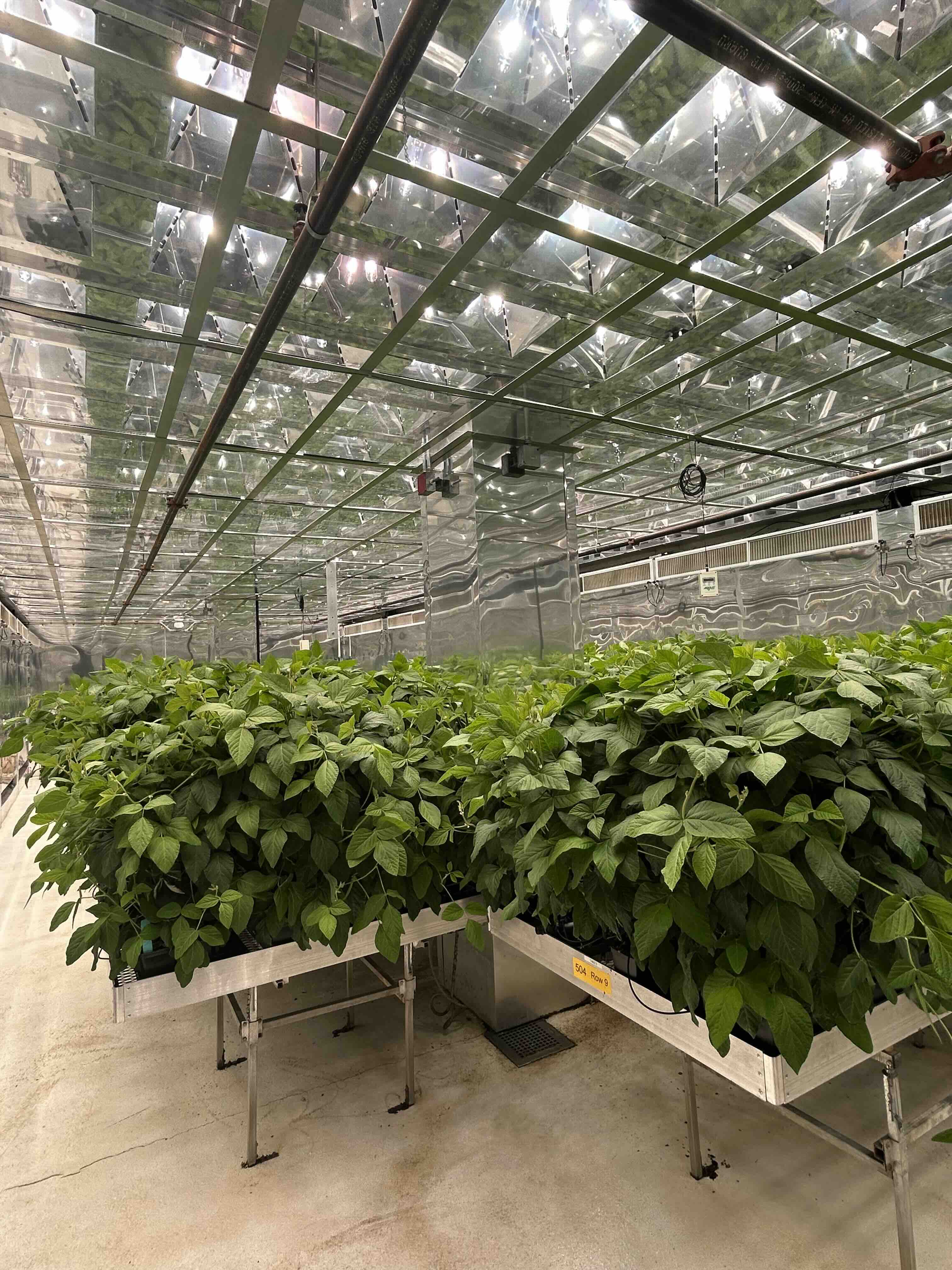
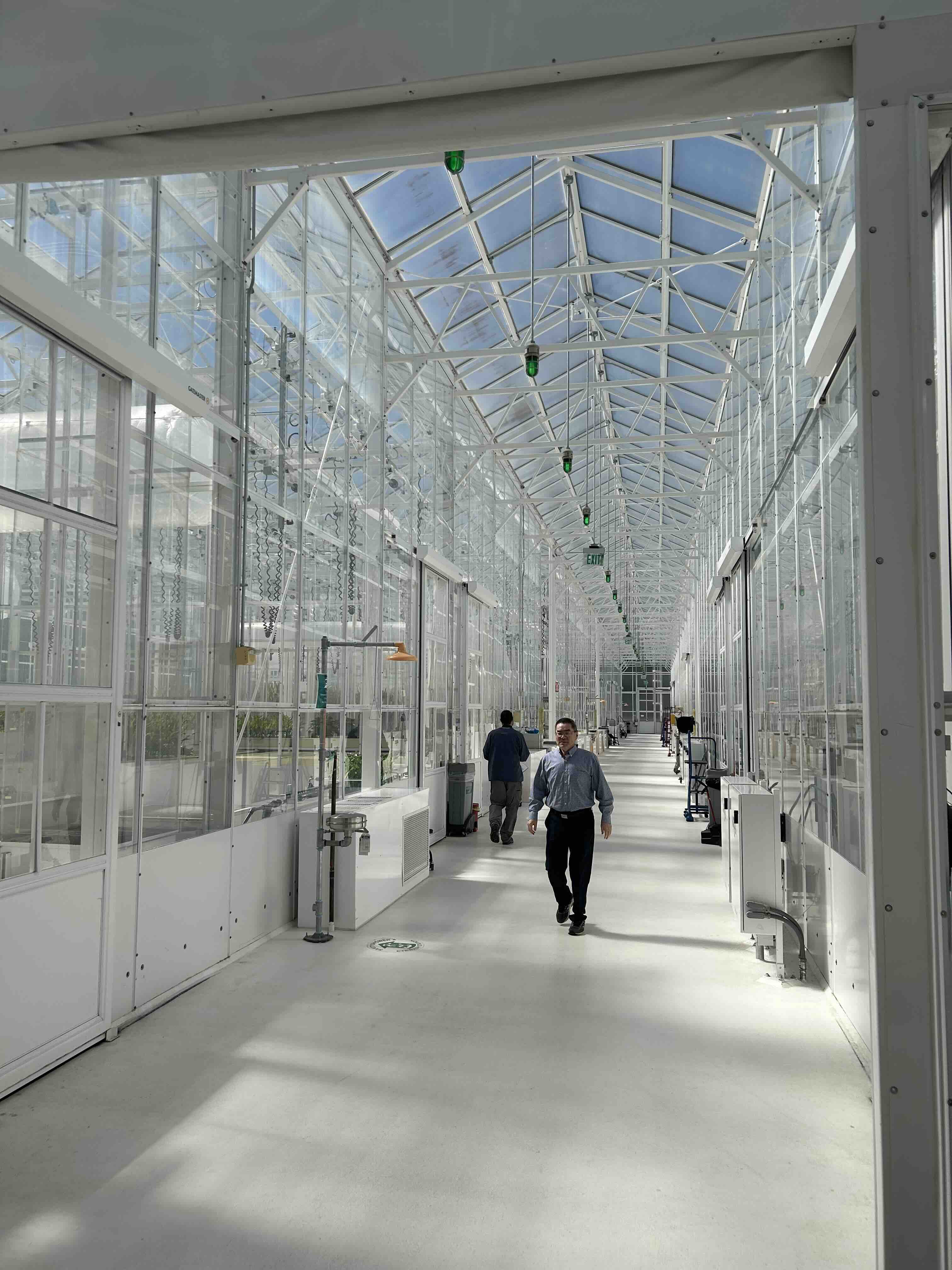
The Advanced Crop Lab at RTP is part of that effort. Its greenhouses cover roughly an acre under glass, divided among 30 bays. The glasshouses have 25-foot ceilings where light, temperature, humidity and carbon dioxide can be controlled independently.
“We can replicate any growing environment around the world here in the Crop Lab,” says Lu Zhongjin, Group leader, Greenhouse RTP and R&D Trait Evaluation. “Instead of waiting for the normal growing season, researchers can grow four or five generations of plants in a year, compared with one or two in the field.”
Another method developed by the Syngenta RTP team, GiFT (Genotype Independent Fast Transformation), has reduced the time required to introduce a new gene into a plant and recover its seeds from about 180 days to around 90. The greenhouse also produces the soybean plants that Scott’s team analyses.
Seed hybrids and varieties expressing candidate traits developed at RTP are sent to roughly 15 countries, including Brazil, Argentina, and China, where researchers can test them in the environments in which farmers would actually grow them.
That network also reflects the scale of the challenge. No single laboratory is likely to solve either problem. Researchers in Brazil have been working on Asian soybean rust for more than two decades.

Any growing environment around the world can be replicated in the Advanced Crop Lab at RTP.
Any growing environment around the world can be replicated in the Advanced Crop Lab at RTP.

Lu Zhongjin, Group leader, Greenhouse RTP and R&D Trait Evaluation, at the Advanced Crop Lab.
Lu Zhongjin, Group leader, Greenhouse RTP and R&D Trait Evaluation, at the Advanced Crop Lab.
The Food and Agriculture Organization and the International Plant Protection Convention have produced guidance to help countries prevent and respond to new pest incursions. In Europe, where fall armyworm reached the mainland in 2023, a four-year research project called EUFAWREADY is developing ways to detect outbreaks early and help farmers and plant-health authorities respond.
The work is less a race towards a finish line than a continuing effort to keep pace with problems that do not remain static.
“Agriculture doesn’t give you the luxury of solving a problem once and moving on,” Charles says. “The pests keep changing. What matters is how quickly we can understand what has changed and turn that knowledge into something a farmer can use.”
Head inside one of Syngenta’s largest biotech research sites; Research Triangle Park.
