Image


Syngenta was one of the first companies in the industry to launch a plan that served as the organization’s sustainability compass. As sustainability has evolved from aspiration to action, our goal has, too. We’re committed to real-world impact, focused on what matters most for people and the planet.
The land available for agriculture is finite, but the pressure it puts on soil, water, and forests is real and growing. Our sustainability goal is simple: Higher yields, lower impact.
Agriculture faces two demands that can appear to be at odds. First: to produce more food, fuel, and fiber for a growing population and changing diets. And to do so while protecting the ecosystems that this production depends on.
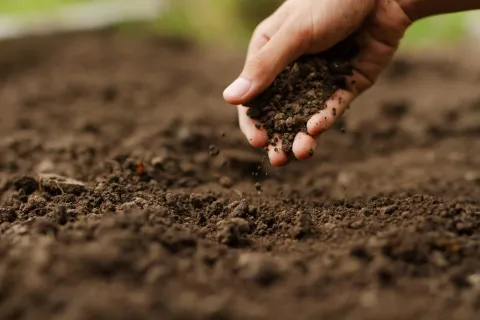
A resilient agricultural system protects yields under stress, stabilizes supply chains, and reduces exposure to external shocks. Healthier soils, targeted inputs, and tailored agronomic practices help farmers maintain or increase yields, while reducing the resources needed for this.
By producing more from the land we already use, we can protect our heritage both on and off the field. Higher yields, lower impact is how Syngenta envisions the way forward.
We pursue this goal through three business imperatives:
In practice, “Higher yields, lower impact” means: a new generation of products designed to produce more while demanding less from the land; better practices adopted at scale by farmers equipped with the right tools, knowledge, and support; and a business built to last, whose growth is tied to the health of the agricultural system it serves.
This delivers three outcomes that matter: more biodiversity, healthier soils, and lower emissions, value for farmers through better productivity and improved livelihoods, and long-term growth for Syngenta by putting our innovation at the center of the transformation agriculture needs.

Delivering on our goal through three business imperatives
By its very nature, any kind of agriculture will impact the environment. That’s why we design all of our products with the future in mind. The starting point is what we put in farmers' hands. Syngenta's seeds, crop protection products, and biologicals are developed with the long term designed in from the earliest stages of research. Seeds that are more resilient to heat, drought, as well as pests and disease, mean farmers can maintain or increase yields under difficult conditions without expanding onto new land.
Crop protection products are developed under our “Safe by Design” principles with a focus on selectivity to the intended target, lower application rates, and sustainability integrated end-to-end from raw materials through to production and end-use. Targeted products are designed to act only on the specific organism threatening the crop. At the formulation stage, we evaluate precision application possibilities, so treatment is delivered only where it's needed. This is how our R&D approach improves on-farm efficiency, maximizes yields, and reduces dependencies for both farmers and our food system.
Our growing biologicals portfolio offers farmers nature-inspired tools that work alongside conventional products to either protect crops (Biocontrols), or to help plants thrive despite abiotic stress - such as drought, extreme heat and flooding (Biostimulants).
Nutrient Use Efficiency products enhance a plant’s ability to take up and process nutrients and improve soil, contributing to growth, development and yield.
Every product we bring to market is an opportunity to shift the balance: more output, lower impact, on the same land.
Our 2030 sustainability target
“Higher yields with lower impact” represents a holistic approach to agriculture. Products alone are not enough – we need to rethink how we grow food. The way we farm determines whether we can unlock the full potential of the land. Through training and capacity building, Syngenta supports farm workers with access to knowledge on how to use products safely and responsibly. Digital tools connect farmers to the data and insights they need to apply inputs precisely, reduce waste, and make informed agronomic decisions tailored for their specific soils and conditions.
Syngenta works directly with farmers - across all continents and all scales of operation - to support the adoption of practices that increase productivity while regenerating the land beneath their feet.
Regenerative practices such as cover crops, crop rotation, integrated crop systems, and no-till can build soil health, sequester carbon, and reduce the pressure to convert forests and natural habitats into farmland.
Our 2030 sustainability targets
Alongside our goal for agricultural transformation, we also have clear goals for our own operations. We’re improving energy and resource use across our operations to lower operating costs, reduce exposure to volatile input markets, and increase the reliability of our manufacturing footprint and supply chain.
We implement solutions to reduce greenhouse gas emissions, and water and waste management systems to minimize the use of natural resources and manage its impact.
And we hold ourselves to the highest standards of worker safety and fair labor. A more resilient and differentiated supply chain protects our ability to deliver for growers consistently and at scale. This ensures continuity of service for growers in every country we operate in, under increasingly unpredictable markets and environmental pressures.
These actions are part of our broader effort to build an agriculture that is rooted in cutting-edge innovation to be more dependable, productive, and prepared for the pressures of the future.
Our 2030 sustainability targets
Stay informed
Receive Syngenta press releases directly per email