

How hybridization, genetic modification and CRISPR gene editing can improve our crops
With the global population projected to reach up to 10 billion by 2050, farmers need to grow more food than ever before without increasing land use.
Key to meeting this urgent need is boosting the performance of the crops we all depend on.
Whether that be increasing plant yields, boosting their resistance to pest or disease, or helping them thrive in stressful conditions, we need to find ways of improving plant genetics.
Here are some of the different techniques that plant breeders use.
Hybridization – generations of improvement
Hybridization has been practiced for centuries and is one of the most well-established ways of improving the genetic performance of crops around the world.
Creating a hybrid involves cross breeding two genetically different parent plants which can be taken from distinct varieties, strains, or closely related species to produce offspring (hybrids) that carry desirable traits from their parents. Take innovations like our hybrid rice or seedless watermelon, which is made by crossing two genetically distinct varieties to produce a new plant with no seeds.

By crossing two genetically different parent plants, the resulting offspring outperforms both of its parents: this is what’s known as heterosis or hybrid vigour.
Hybridization results in plants with improved performance as compared to their parental lines – this can be higher yield, improved resistance to pests or disease or enhanced ability to cope with stresses like heat or water shortage.
How it works?
The techniques of hybridization have been refined over generations to create breeding programs that work at the scale for contemporary agriculture. The key stages for hybridization involve the following process.
- Selection of parents with differing strengths (e.g., one with disease resistance, another with high yield).
- Controlled pollination to ensure the desired cross.
- Evaluation of offspring to select the best-performing hybrids.
This process is repeated through multiple generations to ensure consistent traits are fully embedded into the genetics of a specific hybrid line.
Genetic Modification
Another tool to help improve plant performance is through genetic modification. Breakthroughs in technology through the twentieth century allowed scientists to understand more about the structure of DNA. As a result, researchers developed techniques to introduce new traits into the genome of crops. This process is subject to rigorous global regulation and requires leading scientific expertise.
Hybridization crosses closely related plants naturally to combine existing traits, whereas genetic modification uses laboratory engineering to directly alter DNA, often introducing genes from different species (i.e. bacteria).
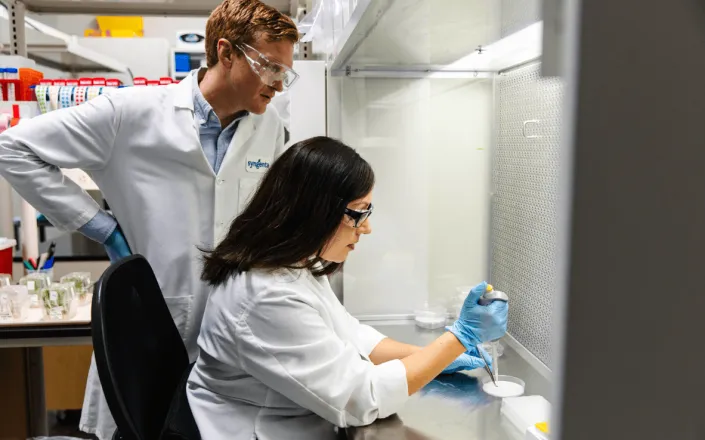
Syngenta pioneer Mary-Dell Chilton’s research was key to the development of one of the earliest types of genetic modification, using a bacterium to transfer new genetic material into plants. This technique, Agrobacterium Mediated Transformation (AMT), remains one of the ways in which beneficial genes can be introduced into the plant genome.
This kind of genetic modification can allow for the development of insect and herbicide tolerance to be built directly into the plant.
For example, crops expressing a gene from the bacterium Bacillus thuringiensis inherit insecticidal traits, meaning they are protected from destructive pests.
Genome Editing
At the cutting edge of plant science is genome editing, a new genomic technique (NGT) that makes plant breeding more efficient.
Genome editing allows scientists to make precise changes to the DNA of a plant, leading to changes in physical traits, like disease or drought tolerance. These changes often mirror changes that could occur in nature or through traditional breeding. Unlike genetically modified seeds, genome editing does not involve introducing genes from another organism.
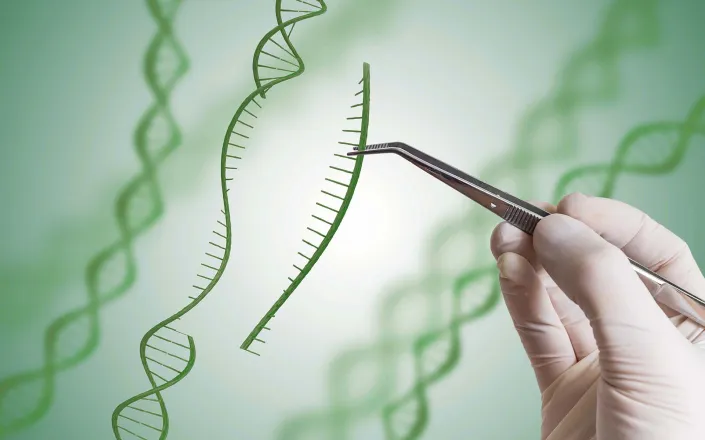
To edit genes, scientists use specific enzymes that act like microscopic scissors within the cell of an organism, cutting the DNA at a specific spot. These enzymes can then remove, add, or replace DNA where it was cut.
The technology is efficient, targeted, and allows for the development of new plant varieties and hybrids at a faster rate than could be achieved through conventional plant breeding.
The CRISPR Breakthrough
More recently, a new genome editing tool called CRISPR has made it easier than ever to edit DNA. CRISPR is simpler, faster, cheaper, and more accurate than older genome editing methods.
Syngenta uses genome editing technologies alongside our patented Hi-Edit technology, which provides a unique ability to deploy genome editing at scale and in diverse genetic backgrounds, accelerating trait deployment.
To support further advances, Syngenta has made rights to selected genome-editing and breeding technologies available for academic research globally.
Image
Read more