
Rice farming:
How can farmers keep rice production high?
Rice is one of the world’s most important crops, with around three billion people eating this staple grain every day. Maintaining high rice production rates is not only crucial for food security, it underpins the livelihoods of the farmers that grow it.
Farmers can boost rice production in a variety of ways, including using precision agriculture techniques to prepare the land before planting, choosing stress-resistant seeds, and choosing sustainable irrigation options.
Why is rice farming important?
Imagine a world without rice. For half the world’s population, this staple grain is their main food source, and for over 140 million people, it’s a livelihood.
Rice is second only to wheat among the foods we eat. Nutritionally, it is one of our primary sources of carbohydrates, providing essential energy and some protein. A versatile grain, it’s especially important in Asia, but also vital in Africa and South America.
The global population is growing and that means rice consumption is likely to increase. On the positive side, production has been rising steadily. But the challenges are increasing with more droughts and floods, pests and diseases, much of that due to a changing climate. To keep productivity high and feed the growing population, there is a continuing need for new, adapted varieties and other agricultural solutions.
What are the different types of rice?
There are many different varieties and types of cultivated rice.
40,000
More than 40,000 cultivated varieties
Oryza sativa
Most rice comes from the grain Oryza sativa (Asian)
2
Asian rice has two major subspecies that make up the majority of cultivated varieties – Indica and Japonica
Different varieties
Indica varieties are usually long grain; Japonica varieties can be either medium or short grain. Within these groups, there are also specialty and aromatic varieties.
Consumers have a vast choice. Some of the common products are all-purpose long grain, arborio (risotto), basmati (used in Indian and Pakistani cuisine), brown (wholegrain), easy cook long grain (parboiled), jasmine (aromatic), and short grain (sticky). But many other versions appear on supermarket shelves.
What is the difference between rice and paddy?
Paddy is the raw, unprocessed form of the grain, while rice is the processed, edible grain.
Paddy
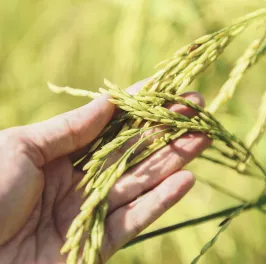
Paddy is the raw, unprocessed form of the grain as it comes from the field, retaining the outer husk and bran layer.
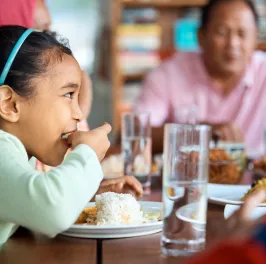
Rice
Rice is the processed, edible grain. The first stage is brown grains, with the husk removed but the bran layer intact. Further milling to remove the bran layer produces white grains.
Rice originated in Asia and Africa. Most of what we eat today comes from a widely cultivated species, Oryza sativa (Asian). It’s believed to have been domesticated from a wild species, Oryza rufipogon, likely in China around 9,000 years ago.
A second cultivated species, Oryza glaberrima (African), was independently domesticated in West Africa about 3,000 years ago.
Today, China tops every other country in both rice production and consumption, followed by India.
Where is rice grown?
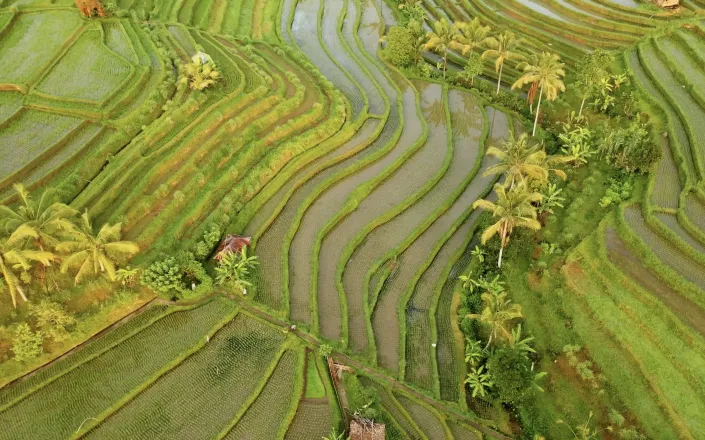
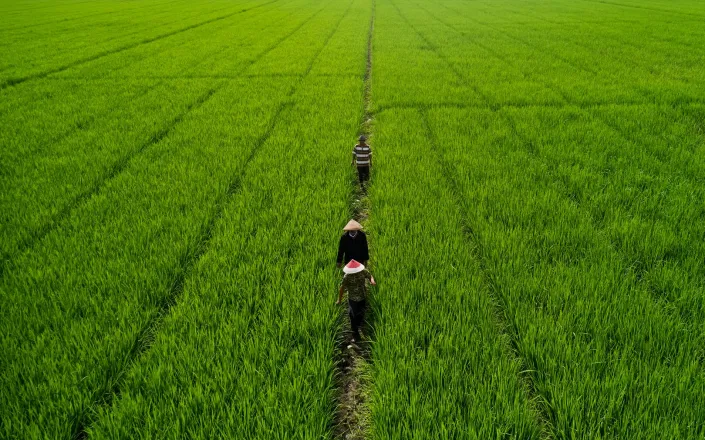
Asia produces more than 90 percent of global supply and consumes 95 percent. China and India are the top two producing countries, growing almost half the global supply. China’s production is kept high thanks to efficient use of land and modern agricultural technologies. India has had several record years, due to its extensive paddies, favorable monsoon patterns, and government support programs.
After China and India, the other top 10 rice producers are Bangladesh, Indonesia, Vietnam, Thailand, Myanmar, the Philippines, Pakistan, and Cambodia.
CASE STUDY
Digitizing China's rice chain
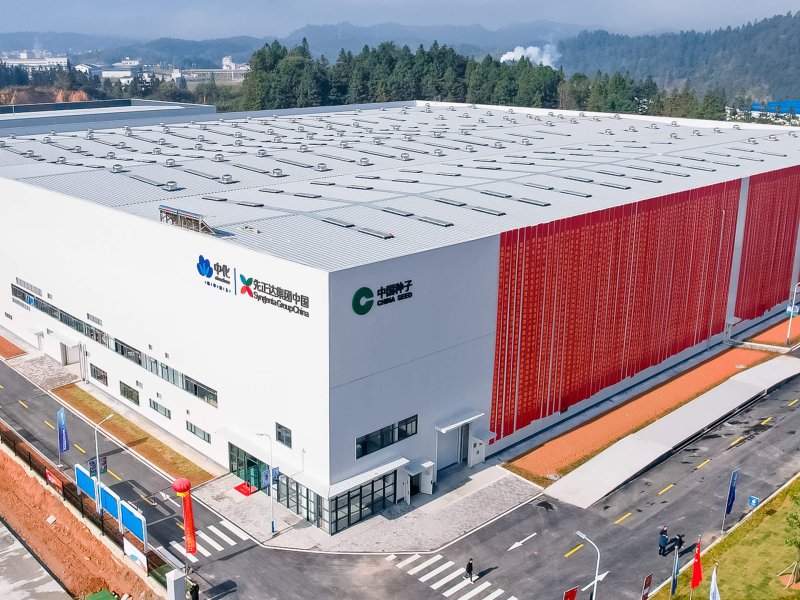
Robotics and digitization are playing a significant part in China’s ability to ramp up its rice production. Getting rice seed from harvest to farmers for the next season is a vast, multi-step operation. A new fully autonomous seed processing plant shows what’s possible.
Image
How is rice grown?
There are different cultivation methods depending on tradition and culture, the landscape, weather patterns, and farmers’ knowledge, resources, and access to mechanization and new technologies.
The main ‘ecosystems’ fall into five categories, defined by the Food and Agriculture Organization.
-
Irrigated Lowland Rice
This is the most prevalent and productive system globally supplying around 75 percent of the world’s rice. Plants are grown in ‘bunded’ (walled) fields with a controlled, irrigated, water supply. The consistent availability of water contributes to good yields, and farmers often plant modern high-yielding varieties and use inputs.
-
Rainfed Lowland Rice
These areas mostly depend on rainfall, and are often in river deltas and floodplains. Fields are typically bunded to conserve the rainwater, but yields are more susceptible to droughts and floods.
-
Rainfed Upland Rice
Fields are on flat landscapes or slopes without bunds. Farmers rely entirely on rainfall and the soil is free-draining, so the fields are vulnerable to drought and produce lower yields.
-
Deepwater/Floating Rice
Deep water fields are usually in low-lying, flood-prone areas where water can be meters deep. They’re only suitable for specialized varieties that can rapidly elongate their stems as water levels rise, allowing the plant to ‘float’ and keep its leaves above the water.
-
Aerobic Rice
This is a key innovation, a water-saving approach where rice is grown in well-drained, non-flooded soils with water controlled by sprinklers or drip irrigation. It’s designed for water-scarce regions and is being grown more widely as water becomes scarcer in many regions.
CASE STUDY
A new vision for Japan's rice fields
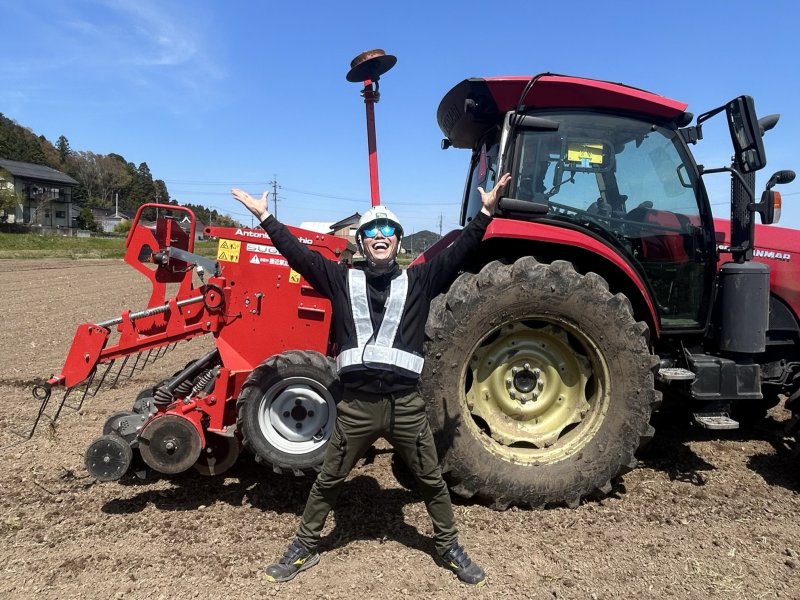
Shuichi Tokumoto not only farms rice successfully, he sings about it (and plays guitar) in his fields for his YouTube followers. Shuichi is passionate about spreading the word on practices such as no-till and direct seeding, which he does with support from RISOCARE®, a Syngenta seed treatment.
Image
How long does it take for rice to grow?
The growing cycle goes through several stages: germination, seedling growth, tillering (producing multiple stems), panicle initiation (flower head formation), flowering, grain filling, and maturity.
The actual time required varies depending on the variety. Varieties can have a short cycle (3-4 months), a medium cycle (4-5 months) or a long cycle (5-6+ months).
Does rice need a lot of water to grow?
Rice plants are semi-aquatic and need constant irrigation throughout the growing season, making it one of the most water-use intensive crops. Plants thrive in flooded conditions, which help to suppress weeds, regulate soil temperature, and provide nutrients.
It’s estimated that it takes 3,000-5,000 liters of water to produce 1kg of grains – the ‘water footprint’. This figure is a complex calculation taking account of ‘green water' (rainwater stored in the soil), 'blue water' (irrigation water from surface or groundwater), and 'grey water' (water needed to dilute pollutants).
Actual water use varies depending on cultivation methods, local conditions and the chosen variety.
Is rice farming sustainable?
As important as rice is to ensuring millions of people around the world are fed, this crop poses sustainability challenges: namely methane production and water use.
-
Methane emissions
Rice production accounts for up to 12 percent of global methane emissions – an enormous hurdle to overcome to ensure global food security. A type of greenhouse gas and a byproduct of global agriculture, methane is more than 30 times more powerful than carbon dioxide.
But it’s not the rice itself that produces this methane - rather the environment it grows in. Rice seedlings are grown in flooded fields, or paddies, submerged in water. Because this water blocks oxygen from reaching the soil underneath, it provides the ideal conditions for the tiny microbes that live in the water. This bacteria consumes decomposing organic matter around them and release methane. The longer the flooding, the greater the build up of this bacteria – and the more methane emitted.
-
Water use
It takes a lot of water to grow rice. For every kilogram of rice, 3,000 – 5,000 liters of water is used to produce it. These challenges reflect a wider reality, with agricultural crop production being the biggest user of water worldwide.
Can rice be grown with less water?
There are methods that improve water use efficiency, including aerobic rice, direct-seeded rice (DSR), alternate wetting and drying (AWD), saturated soil culture (SSC), drip-irrigated rice, a system of rice intensification (SRI), and smart irrigation with sensors. Each method has its advantages and disadvantages.
Plenty of research is going on into which is the best method for certain farming conditions, for farmers with limited resources, or where there are labor shortages.
Regardless of which techniques are used, the goal is to make best use of available rainfall and use irrigation as efficiently as possible.
There are multiple challenges – with climate change being top of the list. It’s estimated that the damage from drought, floods, saltwater, and extreme temperatures puts the livelihoods of 144 million smallholder farmers at risk each season.
Water scarcity, land scarcity, lower yields on rainfed fields, soil degradation and pest and disease outbreaks also contribute to farmers’ vulnerability. Pests and diseases, for example, cause significant damage – one estimate puts crop losses from pest and disease stresses at 37 percent. Adding to this mix, access to new and digital technologies and mechanized tools remains a challenge for many farmers.
On the other hand, rice production also contributes to climate change, with traditional cultivation methods, such as flooding paddy fields and burning straw in open fields, contributing to greenhouse gas emissions.
Beyond actual cultivation, smaller farms often don’t have access to financial services like insurance or credit. They also struggle to access quality seeds and mechanised tools that could improve outcomes. Alongside this, labor shortages and high labor costs also have an impact.
Organisations like the International Rice Research Institute and CGIAR are among many researching solutions for rice growing in a changing world, and governments across Asia and Africa are working to promote sustainable systems. Syngenta’s scientists are also researching new ways to grow rice with less water and to minimise the environmental impact of growing this key crop.
CASE STUDY
Breakthrough technology to transform grass weed control in rice in Asia
Weed resistance to herbicides has long been a challenge for farmers. A new safe, easy-to-apply game-changer is on the way: tetflupyrolimet is the first major herbicide with a novel mode of action in over 30 years. It is now being commercialized for farmers in Asia.
Image
Read more about crop production