Image


Researchers have harnessed the power of microRNAs - tiny molecular “dimmers” that influence gene expression - to help improve crop yields. This work underpins Syngenta’s new agricultural biologicals innovation: EXORT™ technology.
MicroRNAs (miRNAs) are small molecules found in plants and animals that help fine-tune gene activity. Rather than changing DNA, they act as molecular dimmer switches, adjusting how strongly specific genes are expressed, by controlling how much of a given protein is produced.
In humans and animals, microRNAs help regulate biological processes involved in health and development. In plants, microRNAs help to coordinate growth and can influence traits ranging from nutrient uptake to grain and fruit size.
Picture a tiny operator: the blueprint is already written in DNA, but microRNAs help cells decide how strongly to follow certain instructions. That's what’s happening in most cells across living organisms, including humans, animals, and plants.
MicroRNAs were first discovered in the early 1990s. The scientists who made that discovery, Victor Ambros and Gary Ruvkun, were awarded the Nobel Prize in Physiology or Medicine in 2024 for their pioneering work. Their world-leading research revealed a previously unknown, but fundamental step, in how gene activity is regulated in living organisms.
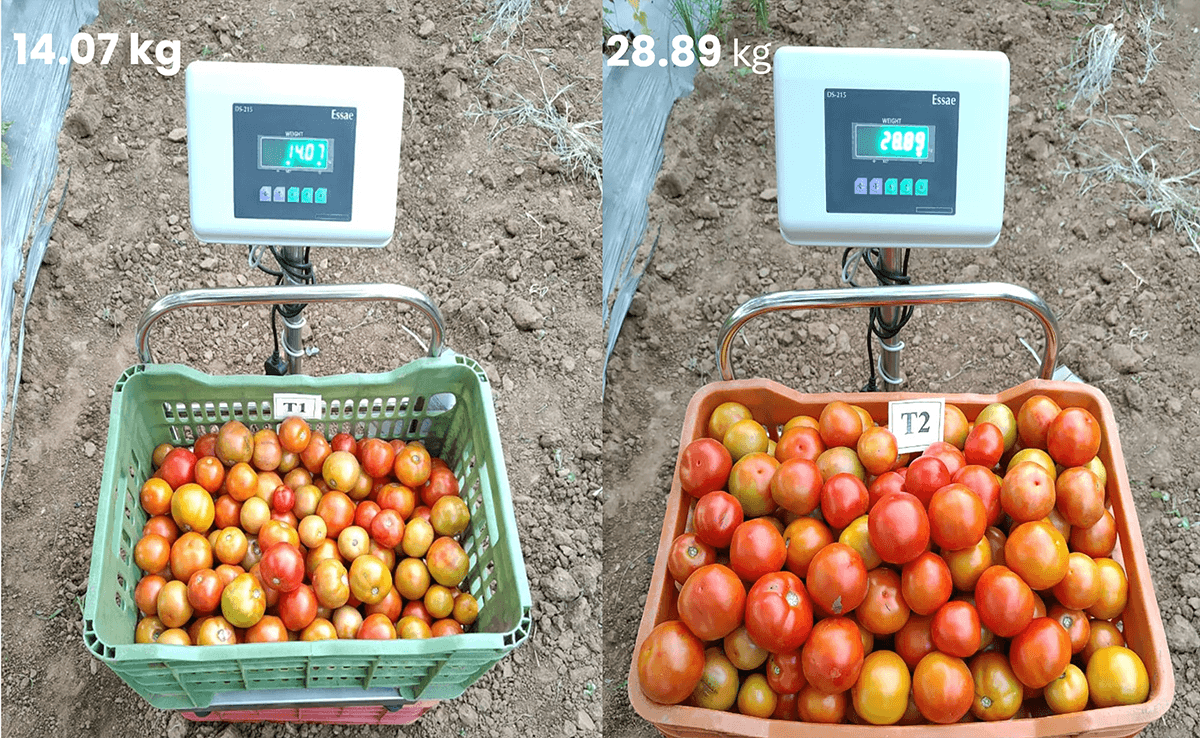
Untreated tomatoes compared to those treated with Exort™ technology.
Ambros and Ruvkun didn't just discover microRNAs. They also figured out what these molecules do inside cells, and how they regulate protein production to influence growth.
Think of it like this:
But because proteins are made outside the nucleus, the cell makes a working copy of a gene’s instruction, called messenger RNA (mRNA), and sends it out to the cell’s protein-making machinery.

This is where microRNAs step in.
MicroRNAs act like a director, reviewing the instruction on its way out. They can either:
Either way, the result is less of a certain protein being made.
Plants and animals can use microRNAs to fine-tune protein production without changing their DNA sequence. In plants, this fine-tuning can directly affect growth, response to environmental stresses, and yield potential - making microRNAs vital to biological innovation.
The discovery of miRNAs not only expanded our understanding of how cells function; it also opened an important opportunity: could we influence these tiny regulators to achieve better outcomes, such as improving plant growth and productivity?
Because miRNAs are part of plants’ natural regulation systems, our researchers are exploring ways to harness their potential to support plant performance – for example by influencing how plants allocate resources and respond to their environment.
This concept underpins Syngenta’s EXORT™ technology: a platform designed to select, extract, and deliver natural microRNAs to plants.
EXORT™ technology underpins Syngenta’s new generation of biostimulant products. Often described as “agricultural vitamins”, biostimulants stimulate plants' natural growth processes to enhance nutrient uptake, efficiency, and overall promote plant health.
The first product based on EXORT™ technology contains a pool of natural, plant-derived microRNAs. When sprayed onto a plant’s leaves, the microRNAs can be absorbed and temporarily influence the plant’s gene expression.
This breakthrough product introduces a new mode of action to increase yield. By helping to regulate how plants allocate their resources, it aims to support the development of bigger grains and more desirable fruits and vegetables.
Natural microRNAs can create a “biological bridge” between plants, transferring specific natural signals that help the receiving plant unlock more of its natural potential and increase yield - one micro-dose at the time.
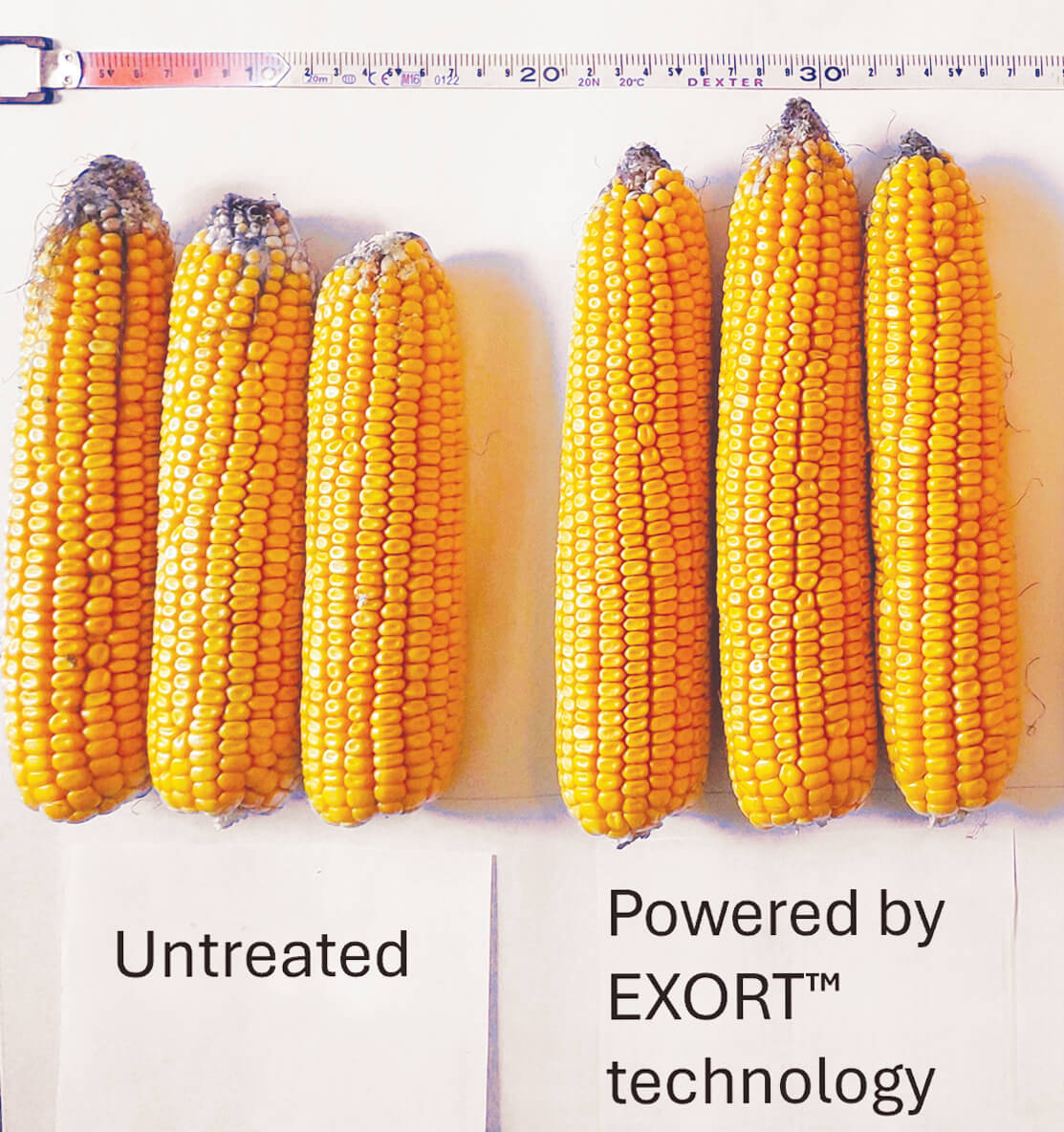
Untreated corn crops versus crops treated with Syngenta’s microRNA technology.
GLOSSARY
The cell’s genetic material, the “blueprint” that carries the instructions needed to build and maintain an organism. In plant and animal cells, DNA is stored in the nucleus and generally does not leave it.
mRNA stands for messenger ribonucleic acid, a single-stranded molecule that carries genetic instructions from a cell's DNA to its protein-making machinery.
Small non-coding RNAs (21–24 nucleotides in plants); that help fine-tune gene activity in plants and animals. They act as molecular dimmers, downregulating the production of some proteins, so that less is produced.
Read more about agricultural technology
Stay informed
Receive Syngenta press releases directly per email