Image
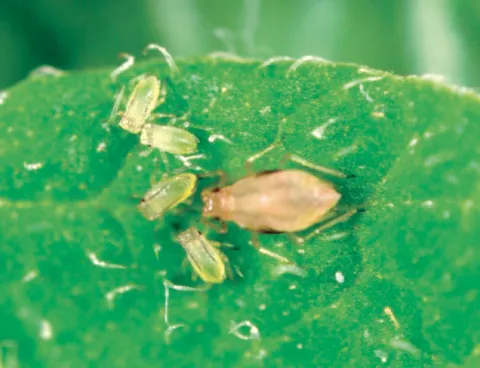


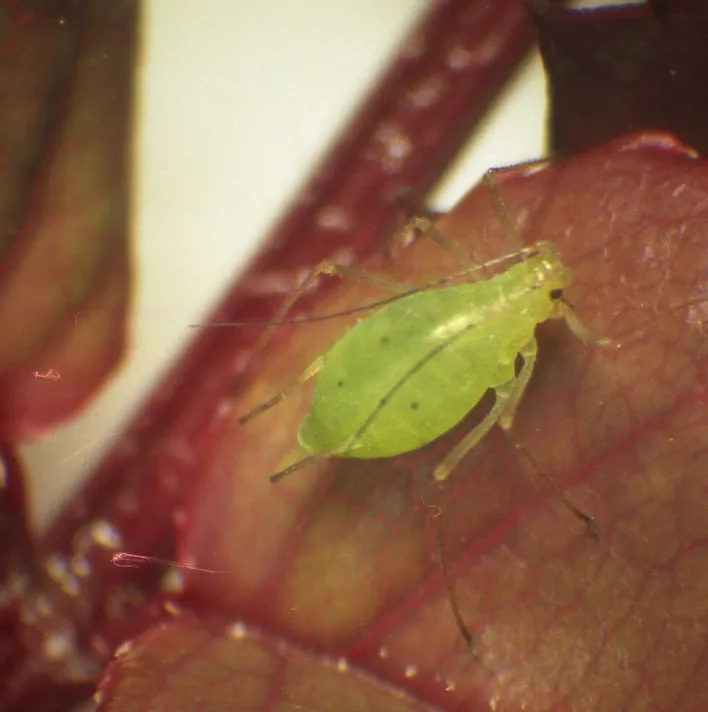
Getting rid of aphids requires multiple tactics, depending upon the species and the plant or crop which is under threat.
From spotting the symptoms to understanding which crops are most at risk, as well as tips for control, here’s everything you need to know about keeping your harvests protected from aphid damage.
Spotting aphids is the essential first step to keeping ahead of the damage they can cause.
Aphids are small, soft-bodied, pear-shaped insects that feed on plant phloem sap using piercing-sucking mouthparts. Their color varies by species, ranging from green and yellow to black, gray or even pink.
There are more than 4,000 different aphid species recorded, with several hundreds of species considered to be major agricultural and horticultural pests. Several species, such as the green peach aphid (Myzus persicae), the cotton aphid (Aphis gossypii), and the black bean aphid (Aphis fabae), are among the most commonly occurring and widely studied. They feed on many plant species and are remarkably adaptable.
A few aphids rarely cause visible harm - but populations can multiply every few days under favourable conditions.

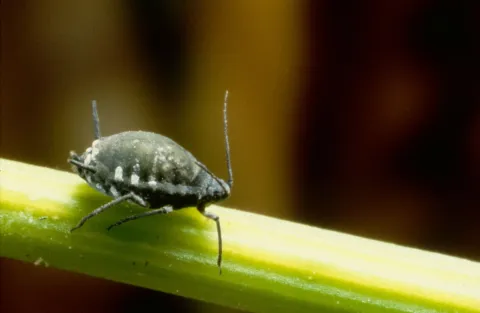
Aphids cause both direct damage (from feeding on plant sap) and indirect damage (through byproducts and disease transmission).
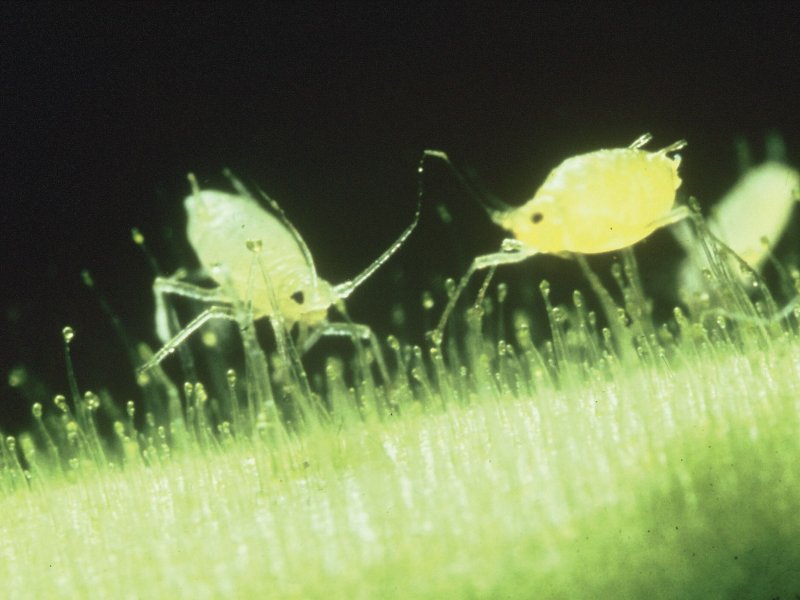
Aphids use their needle-like mouthparts (stylets) to pierce plant tissues and withdraw plant sap, effectively siphoning off the plant's supply of sugars, amino acids, and water. Additionally, aphid saliva is toxic, causing deformation damage to plant tissues.
Indirect damage often causes far greater crop losses and plant health impacts than direct feeding damage alone.
Symptoms for these viral diseases vary but can include mosaic patterning on leaves, mottling, leaf rolling, stunting, and significant yield collapse. Just a few aphids can transmit viruses-often before visible colonies are detected.
Aphids excrete excess sugars as honeydew, a sticky, shiny residue that coats leaf surfaces and fruit. This creates multiple issues:
Aphids moult regularly as they develop, leaving whitish exoskeletons that accumulate in crop canopies and on produce. This creates visible contamination-a significant concern for salad crops and fresh produce.
Skip to aphid control solutions.
There are hundreds of crops that can be vulnerable to aphid infestation, with damage having impacts on both plant health and operational profitability.
Aphids are cosmopolitan, occurring on every continent except Antarctica. Even though some species only feed on one crop (specialists), there are others that can and will feed on multiple plants, vegetables or flowers (generalists).
The following shouldn’t be considered a comprehensive list but outlines some of the biggest threats to a range of different crops. For more tailored advice contact a local agronomist or Syngenta representative.
The key pests here include Cabbage aphid (Brevicoryne brassicae) and the green peach aphid (Myzus persicae). Dense colonies can lodge deep within heads and florets and can be nearly impossible to reach with contact sprays once established. As a result, aphid contamination of harvested produce is a major commercial issue.
The key pest is the currant-lettuce aphid (Nasonovia ribisnigri). Lettuce has low tolerance for aphid pressure because contamination renders a product essentially unmarketable with even small colonies having a major economic impact.
Courgettes, cucumbers, melons, squash are vulnerable to the cotton aphid (Aphis gossypii) and green peach aphid with virus vectoring being a major concern.
With potatoes the key threats are green peach aphid and potato aphid (Macrosiphum euphorbiae) both of which vector potato virus Y and potato leafroll virus.
Aphids such as the green peach aphid transmit viruses (particularly Cucumber mosaic virus), produce honeydew, and promote sooty mould growth-substantially reducing produce quality and creating significant economic losses.
The key pest here is the Pea aphid (Acyrthosiphon pisum) which targets growing points and pea pods.
Black bean aphid (Aphis fabae) forms dense, conspicuous colonies on stems and growing tips.
Woolly apple aphid (Eriosoma lanigerum) can attack roots and aerial wood; Rosy apple aphid (Dysaphis plantaginae) curls leaves and deforms fruitlets.
The green peach aphid overwinters on stone fruits as they make an exceelnt egg host.
Strawberry aphids are a concern as they act as a vector for virus transmission which can drive down harvest quality and impact overall plant health.
Can be targeted by multiple different species but most common is the rose aphid (Macrosiphum rosae). Vectoring of Rose Mosaic Virus is a concern, but roses are almost a universal indicator species for aphid pressure.
Mint is at risk from key pests like the green peach aphid (Myzus persicae), and mint aphid (Ovatus crataegarius). Mint's commercial value is often in oil quality - aphid feeding and honeydew deposition can alter leaf surface chemistry and reduce essential oil concentrations.
Key pests are the green peach aphid (Myzus persicae), and the cotton (melon) aphid (Aphis gossypii). Basil leaves are thin and delicate - even light feeding causes visible distortion and yellowing that renders produce unsalable. Honeydew on basil is particularly problematic because the leaf surface holds moisture, promoting rapid sooty mould development.
At risk from key aphid species like the Willow-carrot aphid (Cavariella aegopodii) and green peach aphid (Myzus persicae). These pests can spread carrot motley dwarf virus complex to parsley, causing reddening, stunting, and leaf distortion.
Aphid infestations are caused by multiple factors, influenced by plant growth stage, weather, aphid behaviour and other environmental factors.

When plants are young and growing, they are most vulnerable to aphid infestation. Winged aphids will land on the plant and leave behind wingless young called nymphs who immediately start feeding. Maturation is rapid and the nymphs are ready to reproduce live young in 7 to 10 days. The University of Kentucky suggests that each aphid can produce around 40-60 offspring.
This explosive growth is most pronounced during warm spring and summer months with long daylight hours. Aphids reproduce asexually through parthenogenesis, where unfertilized eggs develop into live, genetically identical females.
Adding to this advantage, aphids experience telescoping generations: pregnant females carry offspring that are already pregnant with the next generation. These compounding factors enable populations to expand exponentially until the host plant becomes so stressed it can no longer support them. Winged aphids then disperse to find new hosts, restarting the cycle.
Aphid season can vary depending on the species and the region of the world they are present within.
Generally, aphid seasons run from early spring through late summer, with activity and general population peaking between May and July. Aphids thrive in warm, dry weather and can multiply rapidly. The rapid spread means that they can appear on garden plants, roses, fruits and vegetables before their natural predators (like ladybird, green lacewing and hoverfly larvae) become active in sufficient numbers.
The aphid lifecycle is dictated by seasonal changes, daylight length, and temperature. Activity patterns shift throughout the year in response to these environmental cues.
The aphid lifecycle is complex and driven by seasonal changes, daylight length, and temperature. Reproduction occurs through two main strategies: some species alternate between woody winter hosts and herbaceous summer hosts, while others remain on the same host year-round.
In temperate climates, the cycle typically begins with fertilized eggs laid in fall on bark, crevices, or stems of woody hosts (trees, shrubs, or perennial plants). Eggs remain dormant through winter, gradually darkening from green to black as they mature.
When spring arrives, eggs hatch into wingless female aphids called stem mothers. These females do not require mating to reproduce-a critical advantage for rapid population growth.
Throughout spring and summer, populations multiply exponentially through parthenogenesis (asexual reproduction) and vivipary (live birth). This creates three compounding advantages:
Multiple generations can occur throughout a single summer, with each generation living 20–40 days.
As daylight decreases and temperatures drop in fall, environmental cues trigger production of both male and female aphids. These winged forms fly back to their woody overwintering hosts, mate, and females deposit eggs to restart the cycle.
In warmer climates or indoors, aphids may bypass the egg stage entirely, remaining active year-round as live-bearing females reproducing clonally without males or eggs.
The correct management strategy depends on the severity of the population, the crops, plants or flowers at risk and the species of aphid in question.
However, the following steps should be considered when developing a management plan.
Integrated approaches include cultural practices (removing infested plant parts), biological controls (predatory insects like ladybugs, lacewing larvae and certain wasp species that feed on aphids), and direct measures like insecticidal soaps and horticultural oils (e.g., neem oil).
However, when infestations escalate and these methods prove insufficient, growers often turn to chemical controls.
While chemical insecticides can effectively suppress aphid populations, they can harm beneficial insects that naturally control aphids, potentially reducing long-term integrated pest management effectiveness.
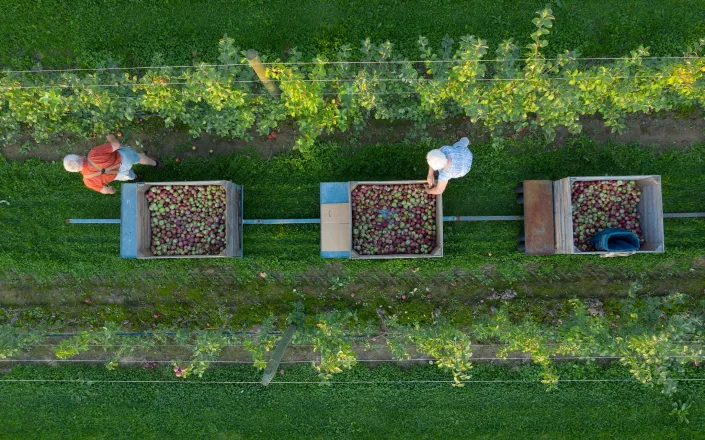
A good example of the benefits that can come from encouraging beneficial insects can be found in the use of flower strips for commercial apple orchards.
Dr Charlotte Howard, lead author of the study, explains: "Flowers attract helpful insects that work hard to keep pests under control. Farmers could save money while boosting biodiversity and letting nature do some of the heavy lifting in looking after their crops.”
Dr Howard and the wider team modeled three different scenarios to predict the most beneficial location for the flower strips – either at the center of the orchard, on land at the end of rows of trees, or as a border to the orchard. In years with high aphid activity, conventional commercial orchards with flower strips saw a lower percentage of apple trees with aphid fruit damage, dropping significantly from 80 percent to 48 percent. In fact, a wildflower strip in the center of an orchard could put insects closer to aphids and potentially benefit farmers by as much as £2,997, or around $4,000, per hectare, per year.

Five invasive pests threatening global food security
Invasive insect species can multiply rapidly, devastating crops and threatening global food security. Discover the five biggest threats facing agriculture today.
| Aphid life cycle | Season | Challenges to control | Approach |
| Overwinter eggs | Winter | Hard to spot, resistant to cold temperatures | Horticultural oil or hose down the plant with water |
| Crawling Nymphs & Wingless Adults | Spring | Rapid population expansion and plant damage | Neem oil or water. Small colonies can be crushed by hand. Encourage beneficial insects and natural predators |
| Winged Adults | Summer | Migratory and vectors of plant disease | Physical barriers or fine insect netting can be effective to protect vulnerable crops. Chemical control options or beneficial insects should also be used as necessary. |
There are thousands of different kinds of aphid and many of them are recurrent threats to a vast range of flowers, ornamentals, fruit, vegetables and other crops.
However, with careful monitoring, a healthy ecosystem of beneficial biodiversity, natural and chemical control methods, pest pressure can be kept under control.
Aphids feed almost exclusively on plant phloem - the vascular tissue that transports dissolved sugars (sucrose), amino acids, and other organic compounds from photosynthesizing leaves to the rest of the plant.
However, phloem sap is sugar-rich but protein-poor. Aphids need amino acids to build tissues and reproduce, but sap provides them in low concentrations. As a solution to this problem, aphids ingest enormous quantities of sap relative to their body size, extracting the amino acids and then excreting the excess sugar as honeydew. Given the amount they consume, a single aphid can produce several times its own body weight in honeydew per day.
This is widely believed but there is no compelling scientific evidence that points to this being effective as a means of controlling aphids.
Aphid-resistant plants deploy a combination of physical barriers, chemical deterrents, and molecular immune responses to prevent phloem-feeding insects from colonizing. There are some plants which aphids will generally not target. Plants with strong odours like onion, garlic, dill and rosemary all have organic compounds which aphids don’t enjoy.
This is dependent on the control method used. Always read the label carefully and follow the instructions exactly as provided.
More on invasive pests and control methods
Stay informed
Receive Syngenta press releases directly per email